
Recent activities:
The Value of Information Problem in Forest Planning:An Overview, presented at the 21st Symposium on Systems Analysis in Forest Resources, San Sebastian, Basque Country, Spain. May 17-21, 2026. A copy of the presentation is available as a pdf file and a draft copy of the paper is available as a word or pdf file. Copy of a revised Powerpoint presentation from the 20th SSAFR symposium in 2024, related to the history of SSAFR, presented again at the 21st SSAFR in May 2026.
Updated spreadsheet showing the details of all Symposia on Systems Analysis in Forest Resources as of July 22, 2026.
Symposia on Systems Analysis in Forest Resources: A 50th Year Anniversary (1975-2024), Mathematical and Computational Forestry and Natural Resource Sciences, 16(2):33-49, October 2024
Symposia on Systems Analysis in Forest Resources: A 50th Year Anniversary (1975-2024), Paper (Word), Table 1 (Excel) and Powerpoint presentation, 20th SSAFR, Hondarribia, Basque Country, Spain. May 13-17, 2024
Emeritus Dean and Professor Bare's foreward to the RTI Historical Document published by the Institute of Forest Resources, December 3, 2017
Dean Emeritus Bare's Seminar One presentation for ESRM 300 class entitled "Foundations of Forest Sustainability". January 5, 2016
An analysis of the economics of growing Douglas-fir versus red alder in the PNW. April 7, 2015
SEFS Spotlight on Dean Emeritus B. Bruce Bare, An interview from SEFS Blog (article #2), February 2015
Institute Director Bare's presentation given at Washington Hardwoods Commission, Annual Meeting, Chehalis, WA. June 12, 2014
Institute Director Bare's presentation given at the 2nd Annual Western Hardwood International Convention and Exposition, Portland, OR. May 21, 2014
Institute Director Bare and three SEFS faculty (Marzluff, Eastin, and Perez-Garcia) update Washington State House Committee on Agriculture and Natural Resources on Institute of Forest Resources research projects. March 12, 2014.
2013 Western Washington Hardwood Assessment now available as Institute of Forest Resources Research Report Number 1. Also available are some additional report tables and an Extended Executive Summary. August 15, 2013; Updated: November 19, 2013
Institute Director Bare updates the Senate's Natural Resources and Parks Committee on the Institute. February 14, 2013
Directors Bare and Ettl update the Legislature on the Institute of Forest Resources. A presentation to the House Agriculture and Natural Resources Committee. January 29, 2013
Letter to the Editor of Journal of Forestry regarding forestry education at the UW. January 22, 2013
The Institute of Forest Resources requests pre-proposals. September 27, 2012
Dean Emeritus Bare announces a strategic vision for the UW Institute of Forest Resources. September 26, 2012; updated November 6, 2012
Dean Emeritus Bare contributes to a discussion concerning online learning in SEFS. Spring 2012. (No longer online)
Dean Emeritus Bare and Interim Director Hinckley describe the rational for changes in the School's undergraduate natural resource management programs. Published in the Western Forester 57(2):12-13, March - April - May, 2012.
Dean Emeritus Bare's Seminar One presentation for ESRM 300 class entitled, "Foundations of Forest Sustainability". January 3, 2012
Dean Emeritus Bare's presentation at Workshop on the Future of Forestry Education (pdf) , SAF Annual Convention, Honolulu, HI. November 4, 2011
Dean Emeritus Bare updates an analysis of the impact of the ABB model on the distribution of indirect costs to SFR. May 26, 2011
Dean Emeritus Bare participates on a panel discussing Natural Resources - Washington Ecosystems: Mountains to the Sound, Graduate and Professional Student Senate Science and Policy Summit, University of Washington, May 13, 2011 (No longer online)
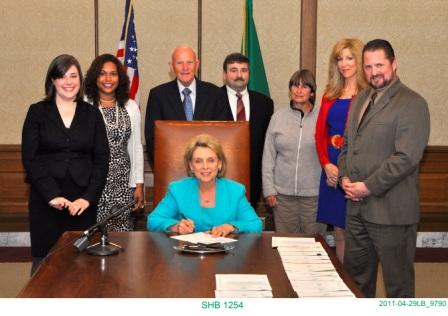
Dean Emeritus Bare attends Governor Gregoire's signing of SHB 1254 ( Institute of Forest Resources). April 29, 2011
Stochastic Optimal Timber Harvest Problem and the Value of Carbon Sequestration: A Real Options Analysis. Presented at the 14th Symposium on Systems Analysis in Forest Resources, Maitencillo, Chile, March 8-11, 2011. Paper prepared by S. Petrasek, J. Perez-Garcia and B. B. Bare.
Dean Emeritus Bare's article Here's How to Value Pre-commercial Timber Stands (A Second Look), published in The Forestry Source 16(2):13-14. January 25, 2011
Dean Emeritus Bare's letter to the editor of The Forestry Source on the Value of Damaged Timber. FS Letter. June 10, 2010
Dean Emeritus Bare's comments about research and indirect costs under the ABB model. June 8, 2010
Additional policy statements and Powerpoint presentations available at this archive site.
Dean Emeritus, College of Forest Resources
Professor Emeritus, Forest Management and
Quantitative Science, School of Environmental and Forest Sciences
Member, Washington State Board of Natural Resources, June 2001 - July 2009
Member, Educational Policy Review Committee, Society of American Foresters, January 1, 2013 - December 31, 2016
April 24, 1942, South Bend, Indiana
B.S. 1964 Purdue University, Forest Production
M.S. 1965 University of
Minnesota, Forest Mensuration, Biometrics
Ph.D. 1969 Purdue
University, Forest Management, Operations Research
Q SCI 190--Quantitative Analysis for Environmental Science
Q SCI 291--Analysis for Biologists I
Q SCI 381--Introduction to Probability and Statistics
Forest management and economics, forest valuation, timber taxation, timber and timberland appraisal, management science, planning, forest policy, and decision support systems.
Initiating a program that is looking into forest sustainability and certification issues in the PNW.
Application of economic and management science tools to problems of forest land management. These problems run over various spatial and temporal scales ranging from the stand- and forest-levels to the multi-forest-level and cover time periods of 1 - 100 years. Both ecosystem management as well as traditional forest management paradigms are studied within a hierarchical framework.
Timber valuation and taxation issues involve the study of various theories for appraising timber and timberlands under differing systems of taxation. Effects at both the intensive and extensive margins are studied. Market-based as well as capitalization-based approaches of timber appraisal are explored for valuing large and small timbered tracts.
Bare, B. B. and E. L. Norman. 1969. An Evaluation of Integer Programming in Forest Production Scheduling Problems. Purdue University Agricultural Station Research Bulletin No. 847, Lafayette, Indiana. 7 p.
Bare, B. B. 1970. The Application of Simulation in Forest Management. Proceedings of IV Forestry Symposium, Federal University of Vicosa, Vicosa, Minas Gerais, Brazil. p. 76-87.
Bare, B. B. 1970. Financial Control of Forest Management Operations. Proceedings of IV Forestry Symposium, Federal University of Vicosa. Vicosa, Minas Gerais, Brazil. p. 31-45.
Bare, B. B. 1970. Purdue's Forest Management Game. Journal of Forestry 68(9):554-557
B. B. Bare. 1971. Computerized Forest Resources Management Games: An Overview and Assessment. Quantitative Science Paper No. 30, Center for Quantitative Science in Forestry, Fisheries and Wildlife, University of Washington, Seattle, WA 98195. 17p. Presented at Computer and Information Systems in Resources Management Workshop, SAF Annual Convention, September 30, 1971, Cleveland, OH.
Atkinson, W., B. B. Bare, G. Schreuder and G. Stenzel. 1974. Evaluating Environmental Impacts from Forest Harvesting Operations: A Simulation Approach. Pacific Logging Congress Loggers Handbook, Vol. 34. 10 p., various pagination.
Bare, B. B. and J. C. Cook. 1974. A Multiple Resource Wildlands Information System for Environmental Impact Assessment Modeling. Proceedings of the Society of American Foresters Workshop on Inventory Design and Analysis, Colorado State University, Fort Collins, Colorado. July 1974. p. 220-245.
Bare, B. B., J. Ryan and G. Schreuder. 1974. Environmental Effects of Forest Land Uses: A Multi-Resource Simulation-Based Approach, Part A, Part B. Journal of Environmental Systems 4(4):309-340. Also presented at the 140th Meeting of the American Association for the Advancement of Science, San Francisco, California. February, 1974.
Bare, B. B., and G. Schreuder. 1975. Environmental Impact Assessment Modeling and Land Use Planning. Proceedings of the Society of American Foresters Workshop on Systems Analysis and Forest Resource Management, University of Georgia, Athens. August 1975. p. 21-36.
B. B. Bare and G. F. Schreuder. 1976. Application of Systems Analysis in Wildland Management: An Overview. College of Forest Resources, University of Washington, Seattle, WA 98195. 15p. Presented at ORSA/TIMS Joint National Meeting, Philadelphia, PA, March 31 - April 2, 1976.
Schreuder, G., K. Rustagi and B. B. Bare. 1976. A Computerized System for Wild Land Use Planning and Environmental Impact Assessment. Journal of Computers and Operations Research, Vol. 3:217-228
Bare, B. B. and G. F. Schreuder. 1976. Experiences with the Design and Application of Wildland-use Models. Proceedings of the 1976 IEEE Conference on Decision and Control, Clearwater Beach, Florida. December 1-3. p. 981-986.
Bare, B. B. and C. W. McKetta. 1977. Forest Land Valuation in Washington State:Comparison of Abstraction and Regression. The Real Estate Appraiser 43(1):25-31.
Bare, B. B., J. S. Bethel and G. F. Schreuder. 1978. Forest Resource Management Information Systems: The Role of the Minicomputer. Proceedings of the IUFRO, Subject Group S6.02, Freiburg, German Federal Republic, June 1978. Published as Mitteilungen der Forstlichen Versuchs- und Forschungsanstalt, Heft 91, Abt. Biometrie und Informatik Nr. 28, Baden-Wurttemberg, 7800 Freiburg i. Breisgau, Federal Republic of Germany. p. 37-46.
Bare, B. B. 1978. Forest Land Valuation in Washington State: Controversy over Methodology. Assessors Journal 13(2):81-99
Hann, D. W. and B. B. Bare. 1979. Uneven-aged Forest Management: State of the Art (or Science?). USDA Forest Service, General Technical Report INT-50, Intermountain Forest and Range Experiment Station, Ogden, Utah. 18 p
Bare, B. B. 1979. Tax Effects of Fertilization. Proceedings of the Forest Fertilization Conference, College of Forest Resources, Institute of Forest Products, Contribution No. 40, University of Washington, Seattle. September 25-27. p. 238-242.
B. B. Bare and T. R. Waggener. 1980. Forest Land Values and Return on Investment. Forest Science 26(1):91-96.
Mitchell, B. R. and B. B. Bare. 1981. A Separable Goal Programming Approach to Optimizing Multivariate Sampling Designs for Forest Inventory. Forest Science 27(1):147-162
Bare, B. B. 1981. The Economics of True Fir Management. Proceedings of the Biology and Management of True Fir Symposium, Institute of Forest Resources Contribution No. 45, College of Forest Resources, University of Washington, Seattle. p. 9-14.
Bare, B. B. and D. W. Hann. 1981. Applications of Ridge Regression in Forestry. Forest Science 27(2):339-348
B. B. Bare. 1982. The Cumulative Impact of Taxes on Forest Investments. Presented at Forest Taxation Symposium, Colonial Williamsburg, VA, February 10 - 11, 1982. 16 p. Sponsored by VPI, U. S. Forest Service and the SAF.
Bare, B. B. 1982. Economic Analysis of the Merchantable Stand for Unthinned Douglas-fir. In: Biennial Report 1980-82, Regional Forest Nutrition Research Project, Institute of Forest Resources, Contribution No. 46, College of Forest Resources, University of Washington, Seattle. p. 40-46.
Bare, B. B. 1983. Forest Land Valuation in Washington State Under the 1971 Forest Tax Law. Property Tax Journal 2(3):157-175
Bare, B. B., D. G. Briggs, J. P. Roise and G. F. Schreuder. 1984. A Survey of Systems Analysis Models in Forestry and the Forest Products Industries. European Journal of Operational Research 18(1):1-18
Mendoza, G. A. and B. B. Bare. 1986. Integrating Stem Bucking and Log Allocation Decisions in Wood Utilization. Forest Products Journal 36(10):70-74
Mendoza, G. A., B. B. Bare and G. E. Campbell. 1987. Multiobjective Programming for Generating Alternatives: A Multiple-use Planning Example. Forest Science 33(2):458-468
G. A. Mendoza and B. B. Bare. 1987. Models for Enhancing the Planning Capability of the National Forest System. Presented at the 1987 SAF National Convention, Minneapolis, MN, October 18-21.
Bare, B. B. and D. Opalach. 1987. Optimizing Species Composition in Uneven-aged Forest Stands. Forest Science 33(4):958-970
Rustagi, K. P. and B. B. Bare. 1987. Resolving Multiple Goal Conflicts with Interactive Goal Programming. Canadian Journal of Forest Research 17:1401-1407
Bare, B. B. and D. Opalach. 1988. Determining Investment-Efficient Diameter Distributions for Uneven-Aged Northern Hardwoods. Forest Science 34:243-249
Bare, B. B. 1988. Yield Forecasting Systems: What's Available. Biometric Models and Simulation Techniques for Processes of Research and Applications in Forestry. Proceedings of the IUFRO Conference. [Universitat Gottingen, August 14-17, 1985]. Schriften aus der Forstlichen Fakulat der Universiatt Gottingen und der Niedersachsischen Forstlichen Versuchsanstalt, Band 90, J. D. Sauerlander's Verlag, Frankfurt am Main, Federal Republic of Germany. p. 30-41.
Bare, B. B. and G. A. Mendoza. 1988. Multiple Objective Forest Land Management Planning: An Illustration. European Journal of Operational Research 34(1):44-55
Bare, B. B. and D. Opalach. 1988. Using a Direct Search Algorithm to Optimize Species Composition in Uneven-Aged Forest Stands. Forest Growth Modelling and Prediction. Proceedings of the IUFRO Conference. [University of Minnesota, August 23-27, 1987]. USDA Forest Service, General Technical Report NC-120, North Central Experiment Station, St. Paul, Minnesota. p. 843-850
Bare, B. B. and G. A. Mendoza. 1988. A Soft Optimization Approach to Forest Land Management Planning. Canadian Journal of Forest Research 18:545-552
O' Hara, A. J., B. H. Faaland and B. B. Bare. 1989. Spatially Constrained Timber Harvest Scheduling. Canadian Journal of Forest Research 19:715-724
Bare, B. B. and G. A. Mendoza. 1989. Valuing Forest Land Using Regression: A Problem in Model Specification and Goodness of Fit. Proceedings of the IUFRO S6.02 Conference on Forest Statistics. [Universitat Freiburg, September 12-15, 1989]. Published as Mitteilungen der Abteilung fur Forstliche Biometrie 89-2, Baden-Wurttemberg, 7800 Freiburg i. Breisgau, Federal Republic of Germany. p. 273-287.
Bradley, G. A. and B. B. Bare. 1989. Resolving Conflicts on the Urban Forest Interface: New Approaches and Recommendations. The Northwest Environmental Journal 5:299-311
Bare, B. B., D. G. Briggs and G. A. Mendoza. 1989. Log Allocation and Soft Optimization: A De Novo Programming Approach. Forest Products Journal 39(9):39-44
Bare, B. B. 1990. An Analysis of Forest Property Tax Burdens under a Land and Reforestation Tax System: A Western Washington Case Study. Canadian Journal of Forest Research 20:554-565
Bare, B. B. and G. A. Mendoza. 1990. Designing Forest Plans with Conflicting Objectives using De Novo Programming. Journal of Environmental Management 31:237-246
Kent, B., B. B. Bare, R. Field and G. Bradley. 1991. Natural Resource Land Management Planning using Large-Scale Linear Programs: The USDA Forest Service Experience with FORPLAN. Operations Research 39(1): 13-27
B. B. Bare and G. A. Mendoza. 1992. Timber Harvest Scheduling in a Fuzzy Decision Environment. Canadian Journal of Forest Research 22:423-428
Mendoza, G. A., B. B. Bare and Z. Zhou. 1993. A Fuzzy Multiple Objective Linear Programming Approach to Forest Planning under Uncertainty. Agricultural Systems 41(3):257-274
Bradley, G. A. and B. B. Bare. 1993. Issues and Opportunities on the Urban Forest Interface. In: Culture, Conflict and Communication in the Wildland-Urban Interface, Edited by A. W. Ewert, D. J. Chavez and A. W. Magill, Westview Press.
Bare, B. B. and G. A. Mendoza. 1994. A Fuzzy Approach to Natural Resource Management from a Regional Perspective. International Transactions in Operational Research 1(1):51-58. (The text referenced herein was presented at the International Symposium on Systems Analysis and Management Decisions in Forestry, Valdivia, Chile, March 1993.)
Anderson, D. J. and B.B. Bare. 1994. A Dynamic Programming Algorithm for Optimization of Uneven-aged Forest Stands. Canadian Journal of Forest Research 24:1758-1765
Bare, B.B., B.R. Lippke, C.D. Oliver and S. Zens. 1995. Eastern Washington Timber Supply Analysis. Center for International Trade in Forest Products, Special Paper 18, College of Forest Resources, Box 352100, University of Washington, Seattle, WA 98195-2100. 215 pp.
B. B. Bare, B. R. Lippke, C. D. Oliver and S. Zens. 1995. Eastern Washington Timber Supply Analysis: Summary. In: 1995 Symposium Proceedings of Ecosystem Management in Western Interior Forests, Department of Natural Resource Sciences, Washington State University, pp. 115-121.
Bare, B. B. 1996. Hierarchical Forest Planning: Some Observations. Proceedings of a Workshop on Hierarchical Approaches to Forest Management in Public and Private Organizations. [University of Toronto, May 25-29, 1992]. Information Report PI-X-124, Natural Resources Canada, Petawawa National Forestry Institute. pp.164-165
Weintraub, A. and B. B. Bare. 1996. New Issues in Forest Land Management from an Operations Research Perspective. Interfaces 26(5):9-25.
Wimberly, M. C. and B. B. Bare. 1996. Distance-Dependent and Distance-Independent Models of Douglas-fir and Western Hemlock Basal Area Growth Following Silvicultural Treatment. Forest Ecology and Management 89 (1): 1-11. December.
Bare, B. B., B. R. Lippke, W. Xu, C. D. Oliver, J. Moffett and T. R. Waggener. 1997. Demonstration of Trust Impacts from Management Alternatives to Achieve Habitat Conservation Goals on Washington Department of Natural Resources Managed Lands, College of Forest Resources, Box 352100, University of Washington, Seattle, WA 98195-2100. 60 pp. + Appendices.
Lippke, B.R., B.B. Bare, W. Xu, J. Moffett and B. Turner. 1998. The Joint Production of Timber and Environmental Values: Demonstration for the Westside of Washington State. Proceedings of the International Symposium on Global Concerns for Forest Resource Utilization - Sustainable Use and Management. Dept. of Agricultural & Forest Economics. Miyazaki University. SEAGAIA, Miyazaki, Japan. October 5-8. Volume II, pp. 521-532.
Bare, B. B. 1999. Organization and Management Systems for Providing Sustainable Forest Resources, School of Environmental and Forest Sciences, University of Washington, Seattle, WA. November 12.
Lippke, B. R., B. B. Bare, W. Xu and M. A. Mendoza. 1999. Economic and Environmental Impact Assessment of Forest Policy Changes for Western Washington. Center for International Trade in Forest Products, Special Paper 27, College of Forest Resources, Box 352100, University of Washington, Seattle, WA 98195-2100. 18 pp.
Oliver, C. D., M. Boydak, G. Segura and B. B. Bare. 1999. Forest Organization, Management, and Policy. In: Maintaining Biodiversity in Forest Ecosystems, M. L. Hunter (Ed.), Cambridge University Press, Chap. 17, pp. 556-596.
Bare, B. B. and R. L. Smith. 1999. Stumpage Value Estimation from Transaction Evidence Using Multiple Regression, Journal of Forestry 97(7):32-39.
Alvardo, E., D.V. Sandburg and B.B. Bare. 1999. Analysis of Area Burned by Wildfires through the Partitioning of a Probability Model. Fire Economics, Planning and Policy: Bottom Lines. Proceedings of a Symposium. [Eds. A. Gonzalez-Caban and P.N. Omni]. USDA Forest Service, Gen. Tech. Report PSW-GTR-173, Pacific Southwest Research Station, Berkeley, CA. p. 59-68.
Bare, B.B. 2000. Observations on Forest Certification. In: Proceedings of Summit 2000: Washington Private Forest Forum. (Ed.) J. Agee, Institute of Forest Resources, College of Forest Resources, University of Washington, Seattle, WA. pp. 139-145.
Bare, B. B., B. R. Lippke and W. Xu. 2000. Cost Impacts of Management Alternatives to Achieve Habitat Conservation Goals on State Forestlands in Western Washington , Western Journal of Applied Forestry 15(4):217-226.
Bare, B. B., B. R. Lippke and W. Xu. 2000. Equitably Treating Individual Washington State Forest Trusts through Consolidated Management: A Conceptual Approach, Natural Resources Journal 40(3):479-497.
Lippke, B. R., S. Marshall, M. Ludwig, J. Moffett, D. Fitzpatrick and B. B. Bare. 2000. Lewis County Economic Assessment. Center for International Trade in Forest Products, Special Paper 35, College of Forest Resources, Box 352100, University of Washington, Seattle, WA 98195-2100. 157 pp.
Bare, B. B. and R. L. Smith. 2001. Estimating Stumpage Values from Lump Sum Timber Sales in western Washington. College of Forest Resources, Box 352100, University of Washington, Seattle, WA 98195-2100. 24 pp.
Manley, B. and B. B. Bare. 2001. Computing Maximum Willingness to Pay with Faustmann's Formula: Some Special Situations from New Zealand. Journal of Forest Policy and Economics 2(2001):179-193. (The text referenced herein was presented at IUFRO Symposium, 150 Years of the Faustmann Formula: The Consequences for Forestry and Economics in the Past, Present, and Future, The Hunting Castle of Kranichstein, Darmstadt, Germany, October 3-6, 1999.)
Lippke, B. R., B. B. Bare, W. Xu and M. Mendoza. 2001. An Assessment of Forest Policy Changes for Western Washington, Journal of Sustainable Forestry 14(4):63-94.
Bare, B. B. 2002. Organization and Management Systems for Providing Sustainable Forest Resources. In: Management of Agricultural Forestry and Fisheries Enterprises. In: Encyclopedia of Life Support Systems (EOLSS). Eolss Publishers, Oxford ,UK.
Manley, B. and B. B. Bare. 2003. Equivalence of the Expectation and Cost Compounding Methods of Forest Valuation - Faustmann Revisited, New Zealand Journal of Forestry 48(1):25-31.
Briggs, D. G., E. C. Turnblom and B. B. Bare. 2005. Non-Destructive Methods and Process Capability Analysis to Assess Conformance of Douglas Fir Stands to Customer Quality Specifications, New Zealand Journal of Forestry Science 35(2/3): 170-188.
Boyle, B. J. and B. B. Bare. 2006. A Forum for Market Solutions for Sustaining Washington's Working Forests. Proceedings of the Society of American Foresters Annual Convention. [Pittsburgh, PA, October 25-29].
Bare, B. B. 2006. Organization and Management Systems for Providing Sustainable Forest Resources. In: Management of Agricultural Forestry and Fisheries Enterprises. In: Encyclopedia of Life Support Systems (EOLSS). Eolss Publishers, Oxford ,UK. [An update of an earlier version.]
Pittman, S. D., B. B. Bare and D. G. Briggs. 2007. Hierarchical production planning in forestry using price-directed decomposition. Canadian Journal of Forest Research 37(10):2010-2021.
Bare, B. B. 2011. Here's How to Value Pre-commercial Timber Stands (A Second Look). The Forestry Source 16(2):13-14.
Petrasek, S., J. Perez-Garcia and B. B. Bare. 2011. Stochastic Optimal Timber Harvest Problem and the Value of Carbon Sequestration: A Real Options Analysis. Presented at the 14th Symposium on Systems Analysis in Forest Resources, Maitencillo, Chile. March 8-11.
Rogers, L., J. Perez- Garcia and B. B. Bare. 2013. 2013 Western Washington Hardwood Assessment. Institute of Forest Resources Research Report Number 1. Includes additional report tables and an Extended Executive Summary.
Bare, B. B. 2015. An analysis of the economics of growing Douglas-fir versus red alder in the PNW. School of Environmental and Forest Sciences, University of Washington, Seattle, WA 98195-2100. 8 pp. April 7,
Bridegam, P., I. Eastin and B. B. Bare. 2015. The Effects of the 2008 Lacey Act Amendment on International Trade in Forest Products. Center for International Trade in Forest Products, Working Paper 125, School of Environmental and Forest Sciences, University of Washington, Seattle, WA 98195-2100. 108 pp.
Petrasek, S., J. Perez-Garcia and B. B. Bare. 2015. Valuing Forestlands with Stochastic Timber and Carbon Prices. Annals of Operations Research, DOI 10.1007/s10479-013-1389-1. Published online May 18, 2013. Printed in Annals of Operations Research 232(1):217-234. Sept. 2015.
Bare, B. B. and A. Weintraub. 2015. A Brief History of Systems Analysis in Forest Resources. Annals of Operations Research, DOI 10.1007/s10479-015-1897-2. Published online May 17, 2015. Printed in Annals of Operations Research 232 (1):1-10. Sept. 2015.
Bare, B. B. and S. F. Toth. 2024. Symposia on Systems Analysis in Forest Resources: A 50th Year Anniversary (1975-2024). Mathematical and Computational Forestry and Natural Resource Sciences, 16(2):33-49. Sept. 2024.
Washington State Office of the Attorney General. 2023. Timber valuation methods, harvest scheduling and forest policy.
Plum Creek Timber Company, L.P. 1995-96. Development of timber harvest schedules for the Rockies Region.
New Zealand Forest Research Institute, Ltd. 1996-97, 1999. Review and Evaluation of the Forest Resource and Evaluation Planning (FREP) Project (1996); preparation of a Five Year Research Plan for the FREP Estate Modeling Program (1997); and a report on the Economics of Forest Fertilization (1999).
Washington State Department of Revenue. 1995-98. Evaluation and developmemt of stumpage valuation methodology for mass appraisal of timber for excise tax purposes.
Winrock International/USAID. 1993-94 (Summers). Natural Resources Management Program, Manila, Philippines. Analyst investigating the assessment of proposed forest policy changes.
MAXXAM Corporation (Pacific Lumber Company). 1994. Short-term timber harvest scheduling and appraisal of both timber and timberland in the redwood region of northern California.
World Bank/INDECO. 1990-91 (Summers). Agency for Forestry Research and Development, Ministry of Forestry, Bogor, Indonesia. Management information systems analyst.
Sealaska Corporation. 1987-88 and 1991-92. Timber valuation and appraisal methodology and procedures for estimating the fair market value of standing timber in southeast Alaska.
METRO of King County. 1990. Timber damage valuation in western Washington.
Washington State Department of Natural Resources. 1985. Transition Lands Program. Analyst investigating the economics of alternative policies effecting transistion forest lands in Washington.
Pack River Management Company. 1981. Evaluation of timber cruising procedures and the estimation of timber volume on a large forest property in eastern Washington and northern Idaho.
U.S.D.A. Forest Service. 1980. Lecturer in a series of nine land management planning workshops held for Forest Service land management planners.
Quinault Indian Nation. 1979. Investment analysis of timber growing opportunities on Tribal lands in western Washington.
Washington and Oregon State Departments of Revenue. 1977-78. Development of land valuation methodology for mass appraisal of bare forest land for ad valorem tax purposes.
USAID/Purdue Project. 1970. Forest management curriculum development. Federal University of Vicosa, Vicosa, Minas Gerais, Brazil.