|
Hume Lab Virginia Merrill Bloedel Hearing Research Center Department of Otolaryngology-Head and Neck Surgery |
 |
 |
|
Hume Lab Virginia Merrill Bloedel Hearing Research Center Department of Otolaryngology-Head and Neck Surgery |
|
|
|
|
Molecular Therapeutics of Hearing Loss Hearing
loss is the most common human disability, affecting over 28 million
Americans, about 10% of the population. While hearing aids and cochlear
implants keep us connected with the world around us, neither treatment
can replace the sensitivity and specificity of the healthy inner ear.
The long term goal of our research is to develop biological therapies
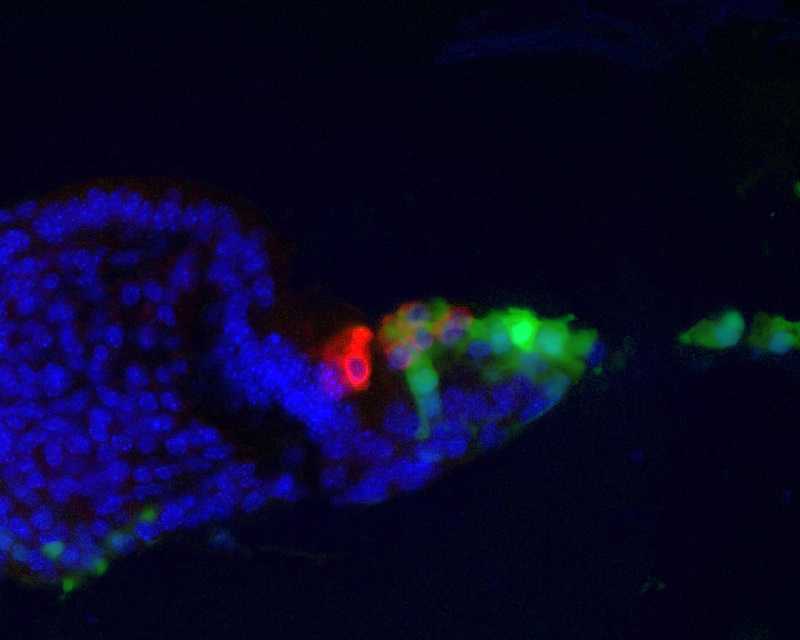
for hearing loss and dizziness. . Our laboratory is conducting research in three primary areas: Hair Cell Regeneration We are interested in developing new therapies that stimulate biological repair or regeneration in the inner ear. Work from a number of laboratories over the past decade has shown that normal patterning of cell types in the inner ear during embryogenesis is controlled by a cascade of genetic "switches" called transcripiton factors. We hypothesize that components of this cascade can be potentially be manipulated in the mature inner ear to regenerate missing or damaged cell types. Postnatal Auditory Neuron Targeting The
hearing nerve connects the sensory hair cells in the inner ear to the
brain in a very precisely ordered map (tonotopicity). This map” is the
basis for our ability to discriminate very closely related pitches or
frequencies of sound and is established early in the embryologic
development of the inner ear. Our laboratory is studying how this map
is formed using animal model systems to identify the molecules that
control the growth of auditory nerve fibers. Our hope is that we can
use these molecules to re-target damaged hearing nerves to cochlear
implant electrodes or regenerated hair cells. Inner ear Viral Gene Delivery We are establishing surgical techniques to deliver therapeutic molecules, such as viruses for gene therapy, to the adult inner ear. Our initial goal is to optimize safe procedures that target the correct region of the inner ear and do not cause further damage to hearing or balance. We will then be poised to test the beneficial effects of new treatments developed based on studies of hair cell regeneration and hearing nerve fiber targeting. Acknowlegements Our research is generously supported by the NIDCD/NIH, NSF and Veterans' Hospital Administration. Our work is highly collaborative and involves many colleagues at the Virginia Merrill Bloedel Hearing Research Center and the University of Washington Medical Center.
A recent UW TV program featured our research on hearing regeneration. "Hearing Loss: Molecular Therapy" |
|
contact: hume@u.washington.edu
background graphic: Gustaf Retzius |