Becca Price
Professor
˜
Interdisciplinary Arts & Sciences, UW Bothell
˜
I study how people learn and how people learn to teach, which is taking me to also study faculty and postdoctoral affairs, including diversity in science. Some of my research is based on how college students learn evolution and science in general. I’ve also studied how postdocs learn state-of-the-art and inclusive teaching strategies.
I encourage undergraduates who are interested in independent study to contact me. Authentic research experiences are so enlightening! Most students won’t pursue careers in biology, but many components of research offer practical experience important for anyone: you will learn to use and interpret statistics; understand how to organize research with a hypothesis, test, and revision; and you will learn elementary computer programming and database design which will help you compose their own programs and databases. We can work together to identify a project for you to study.
Price RM. 2026. Using the Paleobiology Database to Teach Scientific Practices: an Approach Aligned to Relational Culture Theory. Integrative Organismal Biology. 8. obag028. https://doi.org/10.1093/iob/obag028
Niraula A, Sundaravaradan V, Price RM. 2023. Good Drug, Bad Practice: Tackling the Ivermectin Fiasco. CourseSource. 10. https://doi.org/10.24918/cs.2023.17
Shukla SY, Theobald EJ, Abraham JK, Price RM. 2022. Reframing Educational Outcomes: Moving beyond Achievement Gaps. CBE-Life Sciences Education. 21: es2. DOI:10.1187/cbe.21-05-0130.
Price RM, Self CJ, Young WC, Klein ER, Al-Noori S, Ma EY, DeMarais A. 2021. Brief training and intensive mentoring guide postdoctoral scholars to student-centered instruction. CBE-Life Sciences Education. 20: ar64. DOI:10.1187/cbe.21-03-0083.
Joy JP, Price RM. 2021. Harnessing the power of the immune system: Influenza vaccines. CourseSource. https://doi.org/10.24918/cs.2020.53.
Ma EY, Al-Noori S, Klein ER, Freisem K, Price RM. 2021. An active learning workshop to teach active learning strategies. CourseSource. https://doi.org/10.24918/cs.2021.36.
Seah YM, Chang AM, Dabee S, Davidge B, Erickson JR, Olanrewaju AO, Price RM. 2021. Pandemic-related instructor talk: How new instructors supported students at the onset of the COVID-19 pandemic. J. Microbiol. Biol. Educ. 22: doi.org/10.1128/jmbe.v22i1.2401
Segura-Totten M, Dewsbury B, Lo SM, Bailey EG, Beaster-Jones L, Bills RJ, Brownell SE, Caporale N, Dunk R, Eddy SL, García-Ojeda ME, Gardner SM, Green LE, Hartley L, Harrison C, Imad M, Janosik AM, Jeong S, Josek T, Kadandale P, Knight J, Ko ME, Kukday S, Lemons P, Litster M, Lom B, Ludwig P, McDonald KK, McIntosh ACS, Menezes S, Nadile EM, Newman SL, Ochoa SD, Oyenike O, Owens MT, Price RM, Reid JW, Ruggeri N, Sabatier C, Sabel JL, Sato BK, Smith-Keiling BL, Tatapudy SD, Theobald EJ, Tripp B, Pradhan M, Venkatesh MJ, Wilton M, Warfa AM, Wyatt BN, Raut SA. 2021. Chronicling the journey of the Society for the Advancement in Biology Education Research (SABER) in its effort to become antiracist: from acknowledgement to action. Frontiers in Education. https://doi.org/10.3389/feduc.2021.780401.
McCullough EA, Ma EY, Al-Noori S, Price RM. 2020. STEP Forward: Combining formal and informal education to develop communication skills that augment postdoctoral training. Journal of STEM Outreach. 3: 1-10.
Price RM. 2020. Starting conversations about discrimination against women in STEM. CourseSource. https://doi.org/10.24918/cs.2020.29.
Furrow R, Price RM, Thomas A, Yin Y, Benot K. 2020. Vitamin C for colds? Writing LETTERS to synthesize and communicate results from multiple studies. CourseSource. https://doi.org/10.24918/cs.2020.8.
Price RM, Kantrowitz-Gordon I, Gordon SE. 2018. Biomedical postdoctoral scholars’ discourses on scientific identity. CBE-Life Sciences Education. 17: ar29. DOI:10.1187/cbe.17-08-0177
Price RM and Perez KE. 2018. Many paths toward discovery: A module for teaching how science works. Journal of College Science Teaching. 47: 78-87.
Schindler AG and Price RM. 2018. Bad Science: Exploring the unethical research behind a putative memory supplement. CourseSource. https://doi.org/10.24918/cs.2018.4
Ward SJ, Price RM, Davis K, Crowther GJ. 2018. Songwriting to learn: How high school science fair participants use music to communicate personally relevant scientific concepts. International Journal of Science Education, Part B: Communication and Public Engagement. 8: 307-324. DOI: 10.1080/21548455.2018.1492758.
Martinková P, Drabinová A, Liaw Y-L, Sanders EA, McFarland JL, Price RM. 2017. Using DIF analysis to reveal potential equity gaps in conceptual assessments. CBE-Life Sciences Education. 16: rm2. DOI:10.1187/cbe.16-10-0307
McFarland JL, Price RM, Wenderoth MP, Martinková P, Cliff W, Michael J, Modell H, Wright A. 2017. Development and validation of the Homeostasis Concept Inventory. CBE-Life Sciences Education. 16: ar35. DOI:10.1187/cbe.16-10-0305
Price RM and Perez KE. 2016. Beyond the adaptationist legacy: updating our teaching to include a diversity of evolutionary mechanisms. American Biology Teacher. 78: 101-108. DOI: 10.1525/abt.2016.78.2.101
Price RM, Pope DS, Abraham JK, Maruca S, Meir E. 2016. Improving students’ understanding of genetic drift and their ability to correct misconceptions: the positive impact of a computer-based simulation. Evolution: Education & Outreach. 9: 1-14. DOI: 10.1186/s12052-016-0059-6
Price RM, Andrews TM, McElhinny TL, Mead LS, Abraham JK, Thanukos A, Perez KE. 2014. The Genetic Drift Inventory: a tool for measuring what undergraduates have mastered about genetic drift. CBE-Life Sciences Education. 13: 65–75. DOI: 10.1187/cbe.13-08-0159
Abraham JK, Perez KE, Price RM. 2014. The Dominance Concept Inventory: a tool for assessing undergraduate student alternative conceptions about dominance in Mendelian and population genetics. CBE-Life Sciences Education. 13: 349-358.DOI: 10.1187/cbe.13-08-0160
Crowther GJ and Price RM. 2014. In defense of misconceptions. CBE-Life Sciences Education. 13: 3-5. DOI:10.1187/cbe.13-11-0226
Price RM. 2013. Natural selection is a sorting process: what does that mean? American Biology Teacher. 75: 130-132. DOI: 10.1525/abt.2013.75.2.11
Hiatt A, Davis GK, Trujillo C, Terry M, French DP, Price RM, Perez KE. 2013. Getting to evo-devo: concepts and challenges for students learning evolutionary developmental biology. CBE-Life Sciences Education. 12: 494–508. DOI: 10.1087/cbe.12-11-0203
Perez KE, Hiatt A, Davis GK, Trujillo C, French DP, Terry T, Price RM. 2013. The EvoDevoCI: A Concept Inventory for Gauging Students’ Understanding of Evolutionary Developmental Biology. CBE-Life Sciences Education. 12: 665-675. DOI:10.1187/cbe.13-04-0079
Price RM. 2012. How we got here: an inquiry-based activity about human evolution. Science. 338: 1554-1555. DOI: 10.1126/science.1215221
Price RM. 2012. How we got here: evolutionary changes in skull shape in humans and their ancestors. American Biology Teacher. 74(2): 106-110. DOI: 10.1525/abt.2012.74.2.8.
Price RM. 2012.The influence of emersion on the rate at which Nucella lamellosa consumes prey in the laboratory. American Malacological Bulletin. 30(2): 255-259.
Andrews TM, Price RM., Mead LS, McElhinny TL, Thanukos A, Perez KE, Herreid CF, Terry DR, and Lemons PP. 2012. Biology undergraduates' misconceptions about genetic drift. CBE-Life Sciences Education. 11: 248-259. DOI: 10.1187/cbe.11-12-0107. Also featured in the LSE Highlights of 2012.
Carnell R and Price RM. 2012. Global Climate Change: What does it look like? National Center for Case Study Teaching in Science
Price RM. 2011. Performing evolution: role-play simulations. Evolution: Education & Outreach. 4: 83-94. DOI: 10.1007/s12052-010-0300-7
Price RM. 2011. Introducing the nature of science through a required research-based course. CUR Q on the Web. 32: 5-6.
Price RM, Valdés A, and Gosliner TM. 2011. Phylogeny of the aperta clade in the genus Philine (Gastropoda: Opisthobranchia). Veliger. 51: 1-58.
Price RM, Rosypal AC, Powell T, and Kern B. 2008. Adapting an annual research symposium to recruit under-represented minorities to post-college education. Journal of College Science Teaching. 38(2): 49-53.
Droege J, Kochhar-Lindgren G, Leadley S, Price RM, Rosenberg BR, and Tippens N. 2008. University of Washington Bothell. In A. M. Griffin & J. Romm (Eds.), Exploring the evidence, Vol. IV: Reporting research on first-year seminars (pp. 83-87). Columbia, SC: University of South Carolina, National Resource Center for The First-Year Experience and Students in Transition.
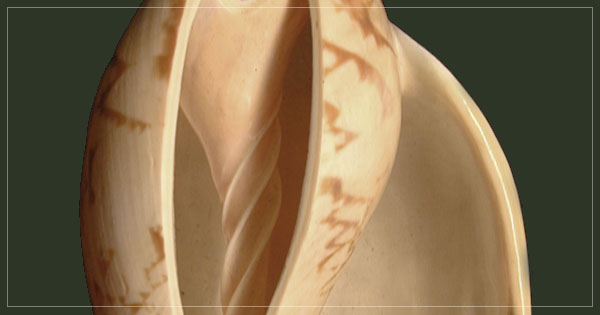
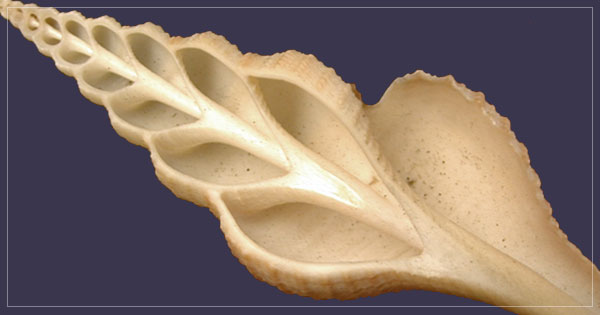
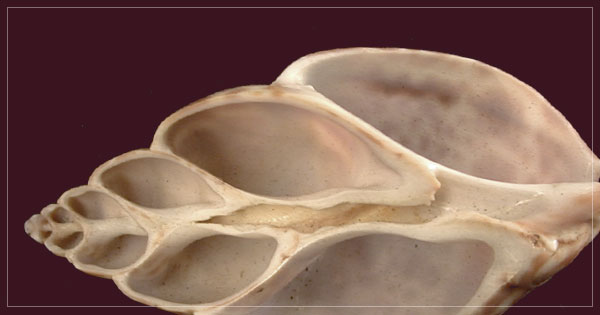
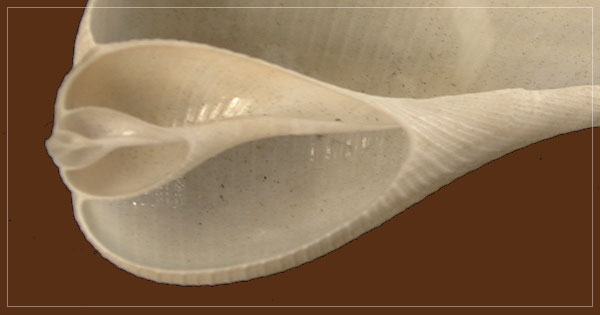
Price RM. 2003. The columellar muscle of neogastropods: muscle attachment and the function of columellar folds.Biological Bulletin. 205: 351-366. DOI: 10.2307/1543298
Jablonski D, Roy K, Valentine JW, Price RM, and Anderson PS. 2003. The impact of the Pull of the Recent on the history of marine diversity. Science. 300: 1133-1135. DOI: 10.1126/science.1083246
From 2018 to 2025, CBE—Life Sciences Education published a feature called "Anatomy of LSE Research." In this feature, I collaborated with other members of the LSE editorial board and with authors to annotate papers that are good models for how to conduct biology education research. We annotate these papers through the lenses of background, definitions, instructional practice, research design, and writing tips. Annotated primary literature using a Learning Lens was pioneered by AAAS Science in the Classroom, a collection of freely available annotated STEM research papers and accompanying teaching materials. I encourage you to pay them a visit, and consider using their papers in your classroom.
Here are the annotations that I have co-written for ‟Anatomy of LSE Research”:
Abraham JK, Gray MJ, Shortlidge EE, Price RM. 2025. Annotations of LSE Research: Students identify how to support their transfer from community college. [Annotations of Gray MJ, Gunarathne SA, Nguyen NN, and Shortlidge EE. 2022. Thriving or Simply Surviving? A Qualitative Exploration of STEM Community College Students’ Transition to a Four-Year University. CBE—Life Sciences Education. 21, ar57. DOI: 10.1187/cbe.21-09-0261.] Editorial by Abraham and Price here.
Russo-Tait T, Zagallo P, Lemons PP, Price RM. 2022. Capturing instructor complexity with persona methodology. [Annotations of Zagallo P, McCourt J, Idsardi R, Smith MK, Urban-Lurain M, Andrews TC, Haudek K, Knight JK, Merrill J, Nehm R, Prevost LB, and Lemons PP. 2019. Through the Eyes of Faculty: Using Personas as a Tool for Learner-Centered Professional Development. CBE—Life Sciences Education. 18, ar62.] Editorial by Russo-Tait and Price here.
Price RM, Sana F, Coffman CR. 2021. Investigating learning objectives. [Annotations of Sana F, Forrin ND, Sharma M, Dubljevic T, Ho P, Jalil E, and Kim JA. 2020. Optimizing the Efficacy of Learning Objectives through Pretests. CBE—Life Sciences Education. 19, ar43.]
Coffman CR, Estrada M, Zhi Q, Price RM. 2020. Testing a model: Identifying supports that influence science identity and intent to persist. [Annotations of Estrada M, Zhi Q, Nwankwo E, Gershon R. 2019. The Influence of Social Supports on Graduate Student Persistence in Biomedical Fields. CBE—Life Sciences Education. 18, ar39.]
Price RM, Ferrare J, Coffman CR. 2020. Mixed Methods: Comparing Modes of Instruction with Instructor Beliefs. [Annotations of Ferrare JJ. 2019. A Multi-Institutional Analysis of Instructional Beliefs and Practices in Gateway Courses to the Sciences. CBE—Life Sciences Education. 18, ar26.]
Price RM, Thompson JJ, Jensen-Ryan D, Coffman CR. 2019. Recognizing potential among diverse undergraduates: A qualitative study with a strong theoretical framing. [Annotations Thompson JJ, Jensen-Ryan D. 2018. Becoming a ‟Science Person”: Faculty Recognition and the Development of Cultural Capital in the Context of Undergraduate Biology Research. CBE—Life Sciences Education. 17, ar62.]
Coffman CR, Price RM. 2018. Spotlighting Diversity: An example of a well-tested and effective classroom intervention. [Annotations of Schinske JN, Perkins H, Snyder A, Wyer M. 2016. Scientist Spotlight Homework Assignments Shift Students' Stereotypes of Scientists and Enhance Science Identity in a Diverse Introductory Science Class. CBE—Life Sciences Education. 15, ar47.]
Coffman CR, Price RM. 2018. Teaching scientifically. [Annotations of Couch BA, Brown TL, Schelpat TJ, Graham MJ, Knight JK. 2017. Scientific Teaching: Defining a Taxonomy of Observable Practices. CBE—Life Sciences Education. 14, 1-12.]
Dolan EL, Price RM, Coffman CR. 2018. Developing an Instrument. [Annotations of Hanauer DI, Dolan EL. 2014. The Project Ownership Survey: Measuring Differences in Scientific Inquiry Experiences. CBE—Life Sciences Education. 13, 149-158.]
Frantz KJ, Price RM, Russo-Tait T, Coffman CR. 2024. Annotations of LSE Research: Enhancing Accessibility and Promoting High Quality Biology Education Research. CBE-Life Sciences Education. 23:fe2. doi: 10.1187/cbe.23-09-0171
Price RM. 2014. Gearing up to jump: annotations and teaching materials for “Interacting gears synchronize propulsive leg movements in a jumping insect” by Malcolm Burrows and Gregory Sutton. Science in the Classroom.
Price RM and Waters SM. 2014. Analyzing datasets in ecology and evolution to teach the nature and process of science. CUREnet: course-based Undergraduate Research Experiences.
Crowther GJ and Price RM. 2014. Re: Misconceptions Are “So Yesterday!” CBE-Life Sciences Education. 13(1), 3-5. DOI: 10.1187/cbe.13-11-0226
Price RM. 2012. How we got here: an inquiry-based activity about human evolution. Science. 338: 1554-1555. DOI: 10.1126/science.1215221.
Price RM. 2011. Introducing the nature of science through a required research-based course. CUR Q on the Web. 32: 5-6.
Droege J, Kochhar-Lindgren G, Leadley S, Price RM, Rosenberg BR, and Tippens N. 2008. University of Washington Bothell. In A. M. Griffin & J. Romm (Eds.), Exploring the evidence, Vol. IV: Reporting research on first-year seminars (pp. 83-87). Columbia, SC: University of South Carolina, National Resource Center for The First-Year Experience and Students in Transition. Stable URL: http://www.sc.edu/fye/resources/fyr/pdf/MExpEvid_IV.pdf
Price RM. 2002. Columellar folds-why are they there? American Conchologist. 30: 8-9.
Price RM. 2001. Review of Ancient Invertebrates and Their Living Relatives by Harold L. Levin. Journal of Geology. 110(1): 122.
Stochowiak, B. Mar 23 2023. How to develop ourselves and others through classroom observations. Episode 458 with Dr. Rebecca Price. Teaching in Higher Ed podcast. https://teachinginhighered.com/podcast/how-to-develop-ourselves-and-others-through-classroom-observations/.
Stochowiak, B. Jan 26 2023. How to not be perfect in teaching and learning. Episode 450 with Dr. Rebecca Price. Teaching in Higher Ed podcast. https://teachinginhighered.com/podcast/how-to-not-be-perfect-in-teaching-and-learning/.
Price RM. 2023. Drop the exam—a seminar by Libi Sundermann and Jutta Heller. https://uwbopenweb.com/blog/2023/05/10/drop-the-exam-a-seminar-by-libi-sundermann-and-jutta-heller/.
Price RM. 2023. Joining in. https://uwbopenweb.com/blog/2023/03/03/joining-in/.
Shukla S, McNabb S, Price RM, Nesvig C, Niitsu K, Conaway T. 2023. Epiphanies with David Goldstein. https://uwbopenweb.com/blog/2023/02/22/epiphanies-with-david-goldstein.
Price RM. 2023. Collaborative failure & success. https://uwbopenweb.com/blog/2023/02/17/collaborative-failure-and-success/.
Conaway T, Price RM, McNabb S, Nesvig C. 2022. Epiphanies with Mike Caufield. https://uwbopenweb.com/blog/2022/12/21/epiphanies-with-mike-caulfield/.
McNabb S, Price RM, Chen M, Shuka S, Conaway T. 2022. Epiphanies from the Field: Epiphanies with Alyson Indrunas. https://uwbopenweb.com/blog/2022/10/21/epiphanies-with-alyson-indrunas/.
McNabb S, Price RM, Chen M, Conaway T. 2022. Epiphanies with Terry Greene. https://uwbopenweb.com/blog/2022/05/26/epiphanies-with-terry-greene/.
Price RM, Chen M, Shukla SY, Conaway T. 2022. Epiphanies with Claire Major Howell. https://uwbopenweb.com/blog/2022/04/20/epiphanies-with-claire-major-howell/.
Conaway T, Groom J, McNabb S, Doyle G, Niitsu K, Shukla SY, Price RM, Lott C, Van Galen J. 2022. Epiphanies and Jim Groom's EDUGLU. https://uwbopenweb.com/blog/2022/03/10/epiphanies-and-jim-grooms-eduglu/.
Price RM, Shukla SY, McNabb S, Conaway T, Niitsu K. 2022. Epiphanies from the Field: Fireside Guest — Lisa Young. https://uwbopenweb.com/blog/2022/02/24/epiphanies-from-the-field/.
Conaway T, Price RM, McNabb S, Niitsu K, Shukla SY. 2022. A Pressbooks Story with Robin DeRosa. https://uwbopenweb.com/blog/2022/01/30/a-pressbooks-story-with-robin-derosa/.
Price RM. 2021. Successful teaching, even in the pandemic. https://uwbopenweb.com/blog/2022/01/07/successful-teaching-even-in-the-pandemic/.
Price RM. 2021. A foray into spec grading. http://uwbopenweb.com/blog/2021/04/29/a-foray-into-spec-grading/.
Price RM. 2021. Quick and easy-to-do strategies to promote online engagement. Teaching and Learning on the Open Web. http://uwbopenweb.com/blog/2021/01/09/quick-and-easy-to-do-strategies-to-promote-online-engagement/.
Teaching and Learning on the open Faculty Learning Community (Van Galen J, Chen M, Conaway T, Doyle G, Maxwell C, Price RM, Shukla S). 2019. Teaching and Learning on the Open Web. https://spark.adobe.com/page/Ga9gbN40tcJN2/.
Price RM. 2018. Research and biology education. http://depts.washington.edu/stepuw/research-and-biology-education/ STEP Blog. originally published on the UW Bothell Office of Digital Learning & Innovation Blog.
Shukla SY, Price RM. 2018. Online annotation tools that help students discuss readings. http://depts.washington.edu/stepuw/online-annotation-tools/ STEP Blog. originally published on the UW Bothell Office of Digital Learning & Innovation Blog.
Price RM. 2017. Video feedback for students. http://depts.washington.edu/etuwb/ltblog/?p=5649UW Bothell Learning Technologies Blog.
Price RM. 2016. A Guest Post from Dr. Rebecca Price: Important Learning Gains from Genetic Drift and Bottlenecked Ferrets. http://simbio.com/blog/post/a-guest-post-dr-rebecca-price.