|
Anthony G.
Greenwald, PhD
HOME
PAGE
Navigate
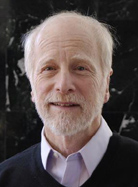
using the menu under my face (Thanks to Jean Alexander Greenwald for the photo and a great deal else)
last
updated: 29 May 2025
NOTESIf you have problems accessing any of the material
on this site, Please contact me.
I would like to make this page broadly accessible, which means not
only accommodating diverse browsers, but also accommodating diverse
visitors.
I am asked about the Chinese symbol at the
left. It was given to me (as a stamp) by graduate students at
East China Normal University in Shanghai, when I visited there in
May, 2002. They translated it as "three clear", referring
to clarity in pronunciation, expression, and thought. They explained
that they found those qualities in the presentations I gave (in English)
during that visit. (Yes, of course I was pleased!)
WHAT'S NEW
- 9 May 2025: This is a long everdue update. My wife (of almost 57years), Jean, was diagnosed in mid-2019 with acute myeloid leukemia. I converted from regular faculty to emeritus status to be caregiver for her remaining 20 months. I wrote about my adjustment to Jean's death in a chapter published in 2022 (available on this site's Publications by Date page). Before Jean became ill, I encouraged her to accompany me to conferences and conventions, knowng that my colleagues were happier to see me when Jean was with me. After Jean's death in 2021, I relocated in mid-2022 to Portsmouth, NH, where our middle child had settled into a legal career, married, and raised a family that includes three now young adult children, who are my neighbors.
Retirement has afforded opportunity for mw to serve as a court expert on the role of implicit bias in discrimination. I testify mosrtly for plaintiffs suirng for discrimination based on race, gender, or age. Plaintiffs who have an expert capable of testifying on implicit bias can substantially increases their likelihood of a successful outcome for their suit. Mainly because I cannot do this work indefinitely, I want to help others to develop the skills needed to be an effective expert witness on implicit bias. Those interested in developing this skill can reach me by email (agg@uw.edu) to arrange a phone call.
-
25 Sep 2020: Recently published and in press articles (since 2018) can now be found both on my Publications by Date page and my Publications by Topic page. Biographical information has also been updated. Apologies for the delay on these new items. I've been distracted by several things. Also, I am just retired (at long last) due to need to give priority to a caregiver role. However, I continue to my scholarly and research work (just not getting paid for it). I am working especially on remedies for implicit bias, with what I hope to be a significant article in the works. That and one other article on best research practices for using the IAT are in progress, both with multiple co-authors. If these have not been made available on this page by December 1, 2020, please email to agg@uw.edu to request a draft. Now that I am retired, I should have more time available for legal expert work, which for several years has mostly been on the role of implicit bias in suits based on race, gender, ethnicity, or age discrimination. Most of the cases I have worked on involve individual plaintiffs, but I am quite interested in class actions, especially when it is possible to use statistics to expose disparaties.
|