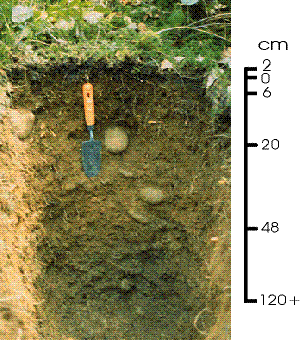
Profile Description
- 2-0 cm; very dark brown (10YR2/2) partially decomposed organic matter; pH=5.2; abrupt smooth boundary
- 0-6 cm; very dark brown (10YR2/2) very gravelly sandy loam; weak fine subangular blocky structure; soft, very friable, nonsticky, nonplastic; many roots; pH=5.6; clear smooth boundary
- 6-20 cm; dark yellowish brown (10YR3/4) very gravelly sandy loam; weak fine subangular blocky structure; soft, very friable, nonsticky, nonplastic; many roots; 55% cobbles and concretions; pH=5.8; gradual wavy boundary
- 20-48 cm; dark brown (7.5YR3/4) very gravelly sandy loam; weak fine subangular blocky structure; soft, very friable, nonsticky, nonplastic; many roots; 70% cobbles and concretions; pH=6.0; clear wavy boundary
- 48-120+ cm; olive brown (2.5YR4/4); extremely gravelly sand; loose; 65% cobbles; few roots; pH=5.8