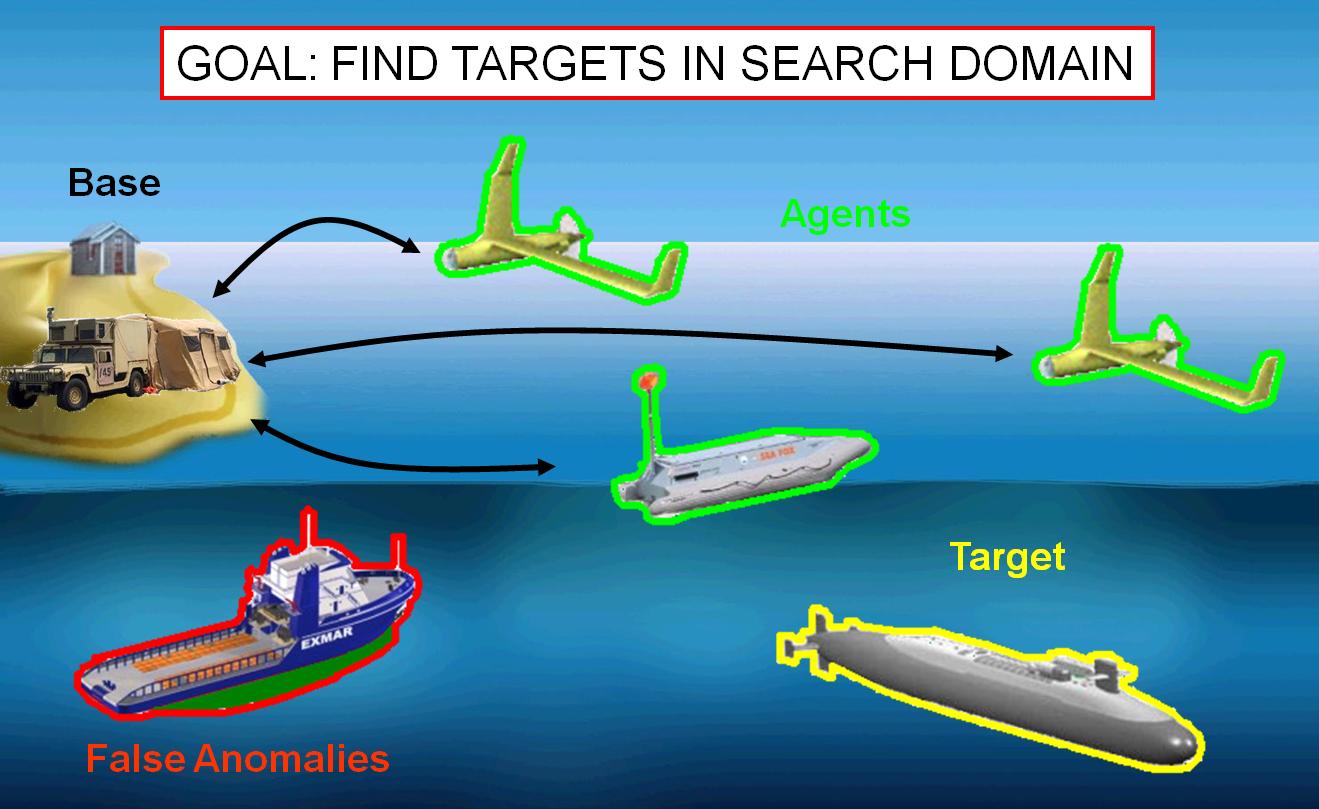
Many modern autonomous systems actually require significant human involvement. Often, the
amount of human support and infrastructure required for these autonomous systems exceeds
that of their manned counterparts. This work involves increasing both the tactical and
strategic decision making capabilities of various autonomous systems. The application
considered is the problem of searching for targets using a team of heterogeneous agents.
The system maintains a grid-based world model which contains information about the probability
of a target being located in any given cell of the map. Agents formulate control decisions
for a fixed number of time steps using a modular algorithm that allows for capabilities and
characteristics of individual agents to be encoded in several parameters. The resulting
search patterns executed by the agents guarantee an exhaustive search of the map in the
sense that all cells will be searched sufficiently to ensure that the probability of a
target being located in any given cell is driven to zero. This system was simulated
using high fidelity simulations with heterogeneous agents in complex and dynamic environments.
After performing successfully in simulation, these algorithms were then verified and validated
on a distributed human-in-the-loop simulator. This system allows a human operator to handle
low level tasks such as state stabilization and signal tracking while preserving the contributions
of the autonomous algorithm. Finally, flight test results are presented showing the benefits of
augmenting a human system with these types of autonomous algorithms.
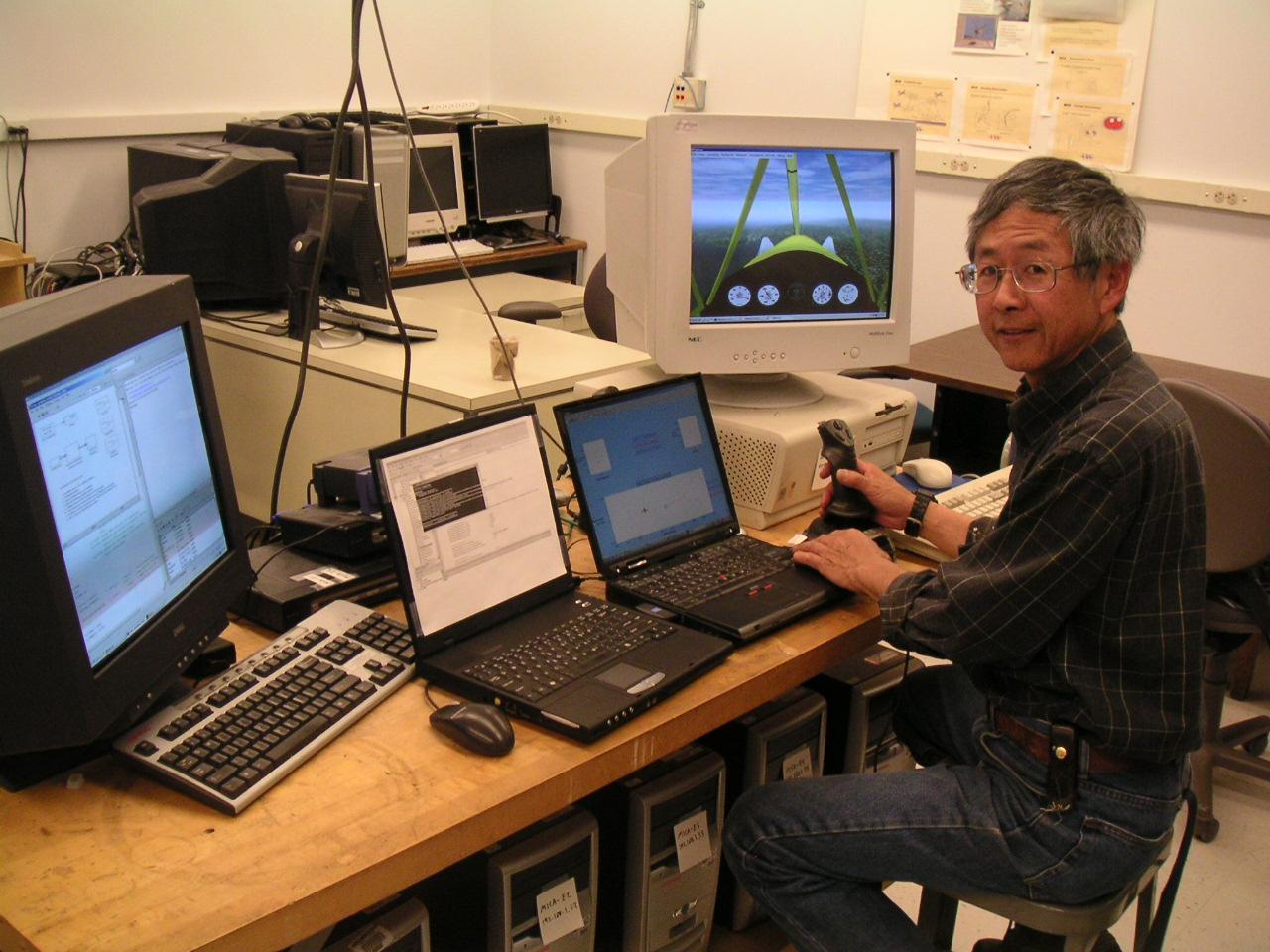
Much unmanned aerial vehicle research aims to minimize the need for human interaction. This is often
achieved by developing algorithms which allow a single agent or possibly a team of agents to operate autonomously.
Most of these mission management algorithms operate at a high, strategic level and assume that low level tasks
such as vehicle state stabilization and payload signal tracking have already been realized. The difficulty in
verifying and validating strategic algorithms in flight tests is that implementing these algorithms requires
the development of many other lower-level subsystems which are not directly related to the strategic algorithms.
This project investigates architectures and hardware implementations of a ground based, distributed testing environment
that can be used to test strategic level algorithms in an efficient manner. This system allows human interaction
at very specific points to avoid developing a fully autonomous system, but still preserves the function and contributions
of the strategic algorithm. This architecture and ground based testing facility greatly reduces development time and
allows algorithms to be tested with few approximations before implementing them on a fully autonomous system. Human
subject results in ground simulation and flight testing are used to verify the approach.
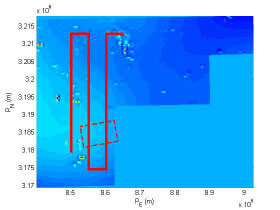
This project focuses on using total magnetic intensity measurements to search and identify magnetic
anomalies in a predetermined area. The challenge is to use noisy sensor measurements to identify and
classify these anomalies. This concept is integrated with a centralized occupancy based map search idea
to apply to a team of autonomous agents.
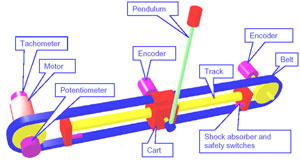
Various research projects regarding low level dynamics and control projects. These projects concern
subjects and areas such as parameter identification, adaptive fault detection, feedforward control,
modeling and control of unstable systems, and design methods of multiple controllers for complex systems.
Several projects involving involving subjects such as numerical techniques for solutions of problems such as
non-linear reaction diffusion systems, partial differential equations, and non-linear differential equations.
 Many modern autonomous systems actually require significant human involvement. Often, the
amount of human support and infrastructure required for these autonomous systems exceeds
that of their manned counterparts. This work involves increasing both the tactical and
strategic decision making capabilities of various autonomous systems. The application
considered is the problem of searching for targets using a team of heterogeneous agents.
The system maintains a grid-based world model which contains information about the probability
of a target being located in any given cell of the map. Agents formulate control decisions
for a fixed number of time steps using a modular algorithm that allows for capabilities and
characteristics of individual agents to be encoded in several parameters. The resulting
search patterns executed by the agents guarantee an exhaustive search of the map in the
sense that all cells will be searched sufficiently to ensure that the probability of a
target being located in any given cell is driven to zero. This system was simulated
using high fidelity simulations with heterogeneous agents in complex and dynamic environments.
After performing successfully in simulation, these algorithms were then verified and validated
on a distributed human-in-the-loop simulator. This system allows a human operator to handle
low level tasks such as state stabilization and signal tracking while preserving the contributions
of the autonomous algorithm. Finally, flight test results are presented showing the benefits of
augmenting a human system with these types of autonomous algorithms.
Many modern autonomous systems actually require significant human involvement. Often, the
amount of human support and infrastructure required for these autonomous systems exceeds
that of their manned counterparts. This work involves increasing both the tactical and
strategic decision making capabilities of various autonomous systems. The application
considered is the problem of searching for targets using a team of heterogeneous agents.
The system maintains a grid-based world model which contains information about the probability
of a target being located in any given cell of the map. Agents formulate control decisions
for a fixed number of time steps using a modular algorithm that allows for capabilities and
characteristics of individual agents to be encoded in several parameters. The resulting
search patterns executed by the agents guarantee an exhaustive search of the map in the
sense that all cells will be searched sufficiently to ensure that the probability of a
target being located in any given cell is driven to zero. This system was simulated
using high fidelity simulations with heterogeneous agents in complex and dynamic environments.
After performing successfully in simulation, these algorithms were then verified and validated
on a distributed human-in-the-loop simulator. This system allows a human operator to handle
low level tasks such as state stabilization and signal tracking while preserving the contributions
of the autonomous algorithm. Finally, flight test results are presented showing the benefits of
augmenting a human system with these types of autonomous algorithms.
 Much unmanned aerial vehicle research aims to minimize the need for human interaction. This is often
achieved by developing algorithms which allow a single agent or possibly a team of agents to operate autonomously.
Most of these mission management algorithms operate at a high, strategic level and assume that low level tasks
such as vehicle state stabilization and payload signal tracking have already been realized. The difficulty in
verifying and validating strategic algorithms in flight tests is that implementing these algorithms requires
the development of many other lower-level subsystems which are not directly related to the strategic algorithms.
This project investigates architectures and hardware implementations of a ground based, distributed testing environment
that can be used to test strategic level algorithms in an efficient manner. This system allows human interaction
at very specific points to avoid developing a fully autonomous system, but still preserves the function and contributions
of the strategic algorithm. This architecture and ground based testing facility greatly reduces development time and
allows algorithms to be tested with few approximations before implementing them on a fully autonomous system. Human
subject results in ground simulation and flight testing are used to verify the approach.
Much unmanned aerial vehicle research aims to minimize the need for human interaction. This is often
achieved by developing algorithms which allow a single agent or possibly a team of agents to operate autonomously.
Most of these mission management algorithms operate at a high, strategic level and assume that low level tasks
such as vehicle state stabilization and payload signal tracking have already been realized. The difficulty in
verifying and validating strategic algorithms in flight tests is that implementing these algorithms requires
the development of many other lower-level subsystems which are not directly related to the strategic algorithms.
This project investigates architectures and hardware implementations of a ground based, distributed testing environment
that can be used to test strategic level algorithms in an efficient manner. This system allows human interaction
at very specific points to avoid developing a fully autonomous system, but still preserves the function and contributions
of the strategic algorithm. This architecture and ground based testing facility greatly reduces development time and
allows algorithms to be tested with few approximations before implementing them on a fully autonomous system. Human
subject results in ground simulation and flight testing are used to verify the approach.
 This project focuses on using total magnetic intensity measurements to search and identify magnetic
anomalies in a predetermined area. The challenge is to use noisy sensor measurements to identify and
classify these anomalies. This concept is integrated with a centralized occupancy based map search idea
to apply to a team of autonomous agents.
This project focuses on using total magnetic intensity measurements to search and identify magnetic
anomalies in a predetermined area. The challenge is to use noisy sensor measurements to identify and
classify these anomalies. This concept is integrated with a centralized occupancy based map search idea
to apply to a team of autonomous agents.
 Various research projects regarding low level dynamics and control projects. These projects concern
subjects and areas such as parameter identification, adaptive fault detection, feedforward control,
modeling and control of unstable systems, and design methods of multiple controllers for complex systems.
Various research projects regarding low level dynamics and control projects. These projects concern
subjects and areas such as parameter identification, adaptive fault detection, feedforward control,
modeling and control of unstable systems, and design methods of multiple controllers for complex systems.
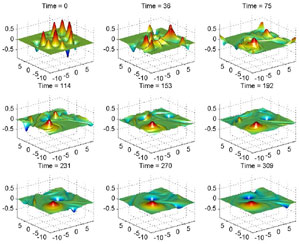 Several projects involving involving subjects such as numerical techniques for solutions of problems such as
non-linear reaction diffusion systems, partial differential equations, and non-linear differential equations.
Several projects involving involving subjects such as numerical techniques for solutions of problems such as
non-linear reaction diffusion systems, partial differential equations, and non-linear differential equations.
