
Nonlinear and nonisothermal problems
The nonisothermal problems are very interesting subjects for numerical analysis. Consider the problem with a first-order chemical reaction.

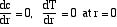

We first look at situations with the boundary conditions given by

in the case of large Biot numbers for mass and heat transfer. We take the specific numbers b = 0.4 and g = 30., and solve the problem for a variety of f2. A typical curve of h versus f is shown below.

Note that a vertical line through f = 0.4 passes three times through the curve. This means that for a given reaction rate condition, set by f, the problem has three solutions, each with a different h and different c(r). We say the problem has multiple solutions. This problem has multiple solutions for 0.21 < f < 0.56. In this range of f the numerical problem to find the solution is formidable.
Values of b (the dimensionless heat of reaction) are not typically so large as 0.4. Values of 0.02 are common, and with g = 30 and d = 1 the curve of the effectiveness factor versus Thiele modulus is shown below.

Clearly, no multiple solutions are possible. If we use realistic values of Bim (say 250) and Bi (say 5) the curve takes the shape shown and multiple solutions are possible. In this case multiple solutions come about because the external heat transfer resistance is so great that the heat of reaction liberated in the pellet cannot escape, thus raising the temperature. The net reaction rate is increased due to the higher temperature even though the effect of concentration diffusion is to decrease the reaction rate. This phenomenon illustrates the difficulty of estimating effects in non-isothermal situations, since there are often competing effects.
Continue on to: Orthogonal Collocation Methods and Finite Difference Methods to solve these problems.
Back up: Formulation, Non-dimensional problem, Combination of Variables, Effectiveness Factor, Linear Problem.