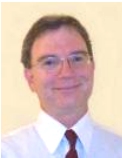
This is the public home page of
John P. Kelly, PhD. I am a vision scientist at Children's Hospital & Regional Medical
Center in the Division. of Ophthalmology.
In addition to my research, I
wrote - and maintain - a PC-compatible software package for generating
stimuli for vision science training and vision experiments.
"Little Stimulus Maker" is a
freeware graphics program that generates visual stimuli for vision experiments.
Here are sample screen
shots of sinewave gratings, gabor patch, radial grating and random noise.Other
patterns are possbile.
Contrast, color, motion ,and temporal modulation can be varied rapidly:

Sample screens
**** Support for the LSM program was provided by a
grant from
the National Science Foundation (NSF IRI 97-03598)
and by the William O. Rogers Trust Fund to Children's Hospital,
Seattle, WA *****
NEW ** I have generally discontinued development of this software.
However, I have fixed several bugs that were present in older versions:
* a bug in triggering timing after a pause is fixed.
* when using Matrox video boards, you needed to initiate the graphics mode twice for proper frame rates. That is now fixed.
** I will continue to trouble shoot the program upon special request
In
order to allow flexibility and speed, the program uses standard PC video
hardware in 256 color mode. Therefore, only 255 unique colors can be on the screen
at one time. A bitmap in video memory determines the layout of the 255 colors
on the screen while the program can apply various spatial and temporal profiles
to the bitmap. This technique allows for rapid changes in contrast or color at
the frame rate of the monitor. Multiple bitmaps can be serially presented for
more complex stimuli. Some of the options are:
- Make sinewave gratings,
gaussian blobs, 2-D gabors, flicker, checkerboards, dynamic random dots,
etc.
- You can drift the spatial
pattern at a constant velocity (or by an arbitrary velocity defined in a text file).
- Move the bitmap of the
stimulus in an arbitrary x-y location (user defined text file).
- No programming needed, new
configurations can be easily stored and edited.
- HTML Help file (but needs
updating -- any volunteers?) (click here for the
HELP File)
- Psychophysical Method
of Adjustment or 2-Alternative Forced Choice for contrast threshold (use
the mouse to vary contrast, spatial frequency, drift velocity, PCX file,
location of the pattern on the screen).
- Basic visual stimulator for
VEP & electrophysiology.
- Can independently sweep
contrast and sweep spatial frequency.
- Provides a TTL trigger via
the Parallel Printer Port for external equipment. Allows you to output a
TTL pulse (~100 microsec.) from every frame to 32766 frames.
- Accepts an external TTL pulse
to the Parallel Printer Port for initiation of stimulus.
- Spatial resolution up to 1280
x 1024 pixels.
- Can import up to 52 PCX files
(16MB+ video memory) then modulate each image at the frame rate.
- You can define contrast by an arbitrary
spatial waveform (1-D) or by an arbitrary temporal waveform.
- Corrects for the monitor's
(or any display device) gamma curve using calibrated luminance correction.
- For compatible hardware,
vertical and horizontal timing of the video can be varied with
'VARYH&V.EXE' Please see caution statement below.
- Calibrate your monitor with a
photometer output manually or automatically with a National
Instruments Analog-to-Digital board (LAB PC+ or try PCI-1200
board, part # 777386-01).
- FREE!!
Here are the limitations:
- PC compatible computer of
at least 350 MHz (usually can get one free these days)
- Runs best under DOS but
you can run in Windows 98 (best if you restart under MS-DOS).
This is because Windows (98/Me/2000/XP) interrupts the LSM program and causes it to intermittently skip
a display frame. If every video frame is crucial, then restart under MS-DOS, then run LSM.
- If you run exclusively under DOS
you need a DOS mouse driver. Try the CuteMouse driver from
cutemouse.sourceforge.net or you can also
download the Microsoft mouse driver Ver 11 from
softwarepatch.com
- The program rarely operates
under Windows NT/2000/XP, which is dependent on the video board BIOS. Best
performance occurs if you restart under
DOS. See notes about Windows NT/2000+ here.
The program has worked on Windows XP on Dell laptops with GeForce/ATI graphics cards with VESA VBE support.
- Best performance with a video board
supporting VESA VBE 2.0 or 3.0. --
try using the program UNIVBE 6.7, which unfortunately is no longer available
from Scitechsoft,
try this self-extracting file UVESA.EXE, which installs a Terminate and Stay Resident driver for VESA bios.
- RECOMMENDED VIDEO BOARDS:
Matrox Series boards,
(Millennium II, Mystique, G200, G400)
NVIDIA: riva 128, 128 zx, TNT, TNT2, GeForce, GeForce2
- If you have a MATROX Card you can get 100-160 Hz frame
rates (Click here for more info).
- LSM is limited to 8-bits intensity
per gun (i.e. Red 0-255, Green 0-255, Blue 0-255). The program should work
with Pelli & Zhang'sVideo Attenuator, but I have not tested it yet.
- Automated calibration is
limited to the Lab PC+ A/D card, otherwise manual entry is needed for
calibration
- As with any freeware
software, the program may have bugs!
Feedback:
If you would like to give me technical advice / feedback, or report bugs
with the program, you can write to me, or phone your comments about LSM.
Due to spam activity I no longer communicate via e-mail on this program.
LSM files are copyrighted by:
John P. Kelly, Ph.D.
Ophthalmology
W-4753
Children's Hospital & Regional Medical Center
Seattle WA, 98105
206-987-3899 (USA)
***The software is not to be sold. Due to the nature of freeware, I cannot be held responsible
for damages resulting from use with this software. The software should be for
research purposes only. ***