
Evolutionary transitions in sexual systems, pollination mode, and ploidy
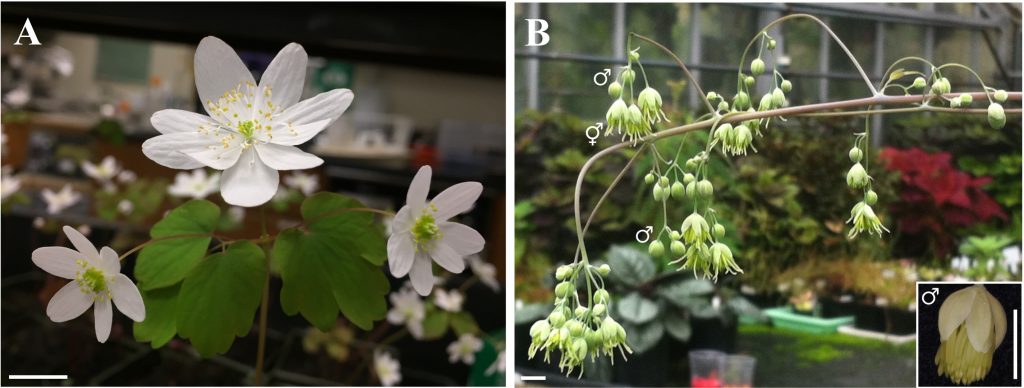
Few empirical systems allow for the joint examination of evolutionary patterns and the genetic mechanisms underlying the emergence of complex phenotypes. The repeated evolution of wind pollination from insect pollination, dioecy (separate sexes) from hermaphroditism, and polyploidy (multiple genomes within a species) from diploidy in a group of closely related species provides a unique opportunity for multiple, independent comparisons of trait evolution.
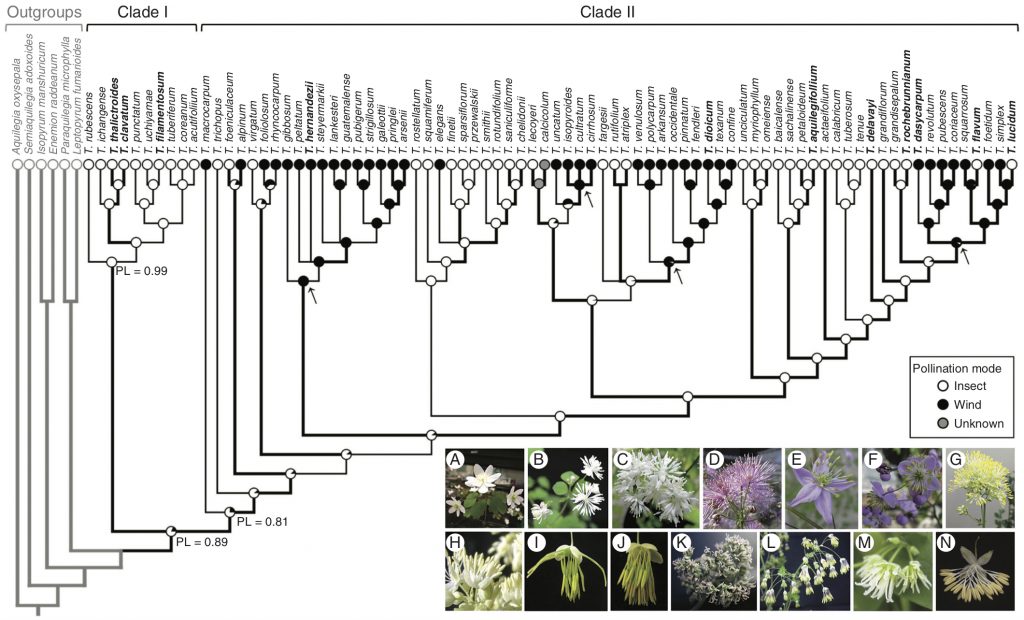
The overall goal of this project is to investigate patterns of correlated trait evolution in a phylogenetic comparative framework, to inform future directions on the underlying genetic basis of complex phenotypes (wind pollination syndrome, separate sexes) that have evolved repeatedly in a diverse angiosperm lineage.
This research thrust on the flowering plant genus Thalictrum (Ranunculaceae) focuses on the evolutionary consequences of the emergence of novel floral traits and is funded by an NSF-OPUS mid-career synthesis award.
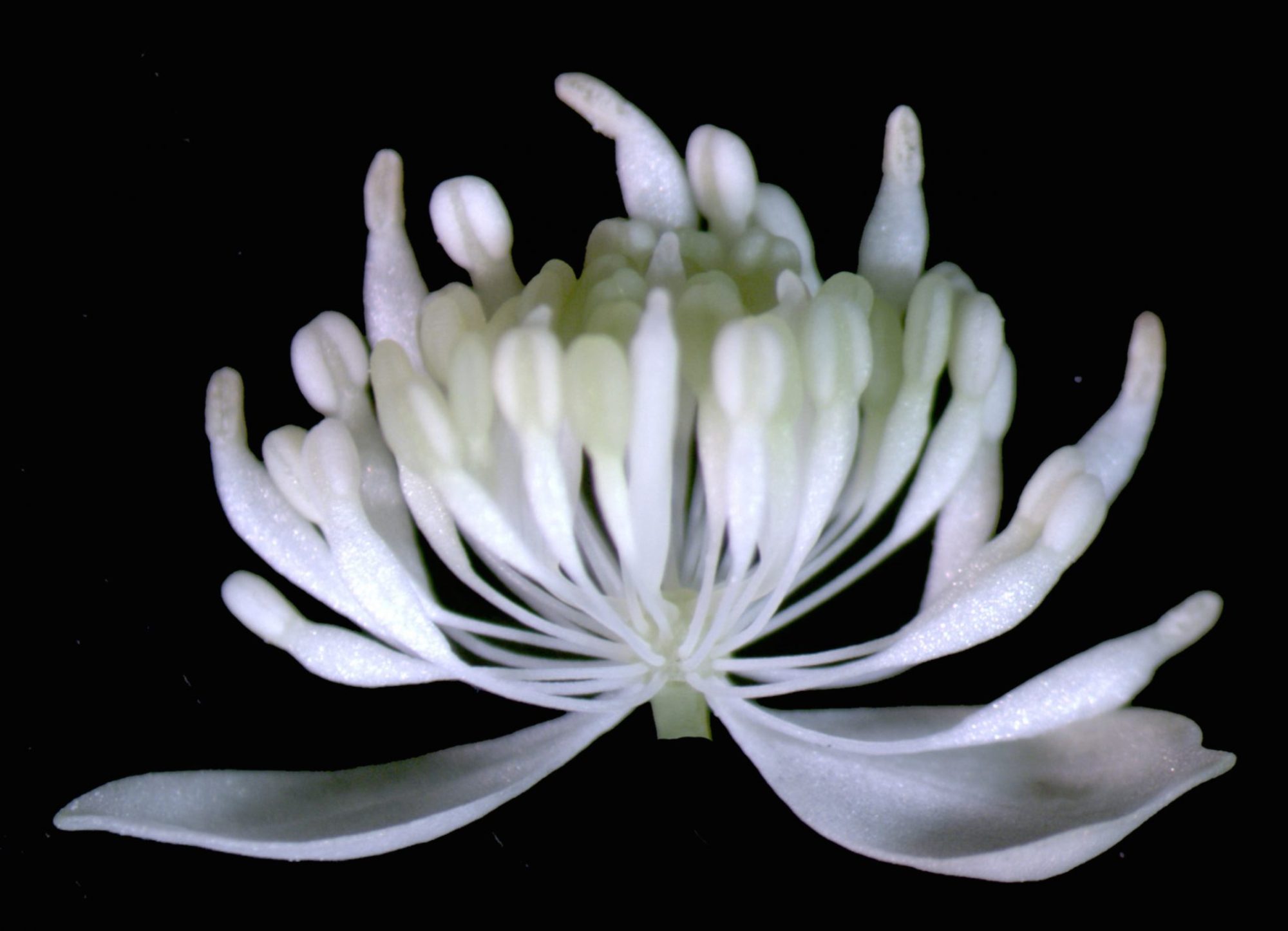
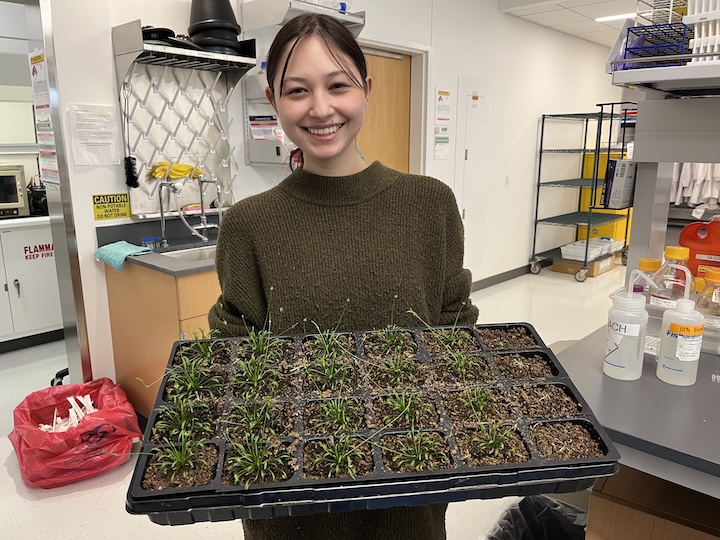
We are also developing Myosurus minimus as a new model system to accelerate developmental genetic investigations in the Ranunculids, an informative lineage sister to other eudicots and to the pre-core eudicot ancestral whole-genome duplication.
Saya in the lab with Myosurus minimus
Reconstructing the ancestral role of a master regulator of flowering
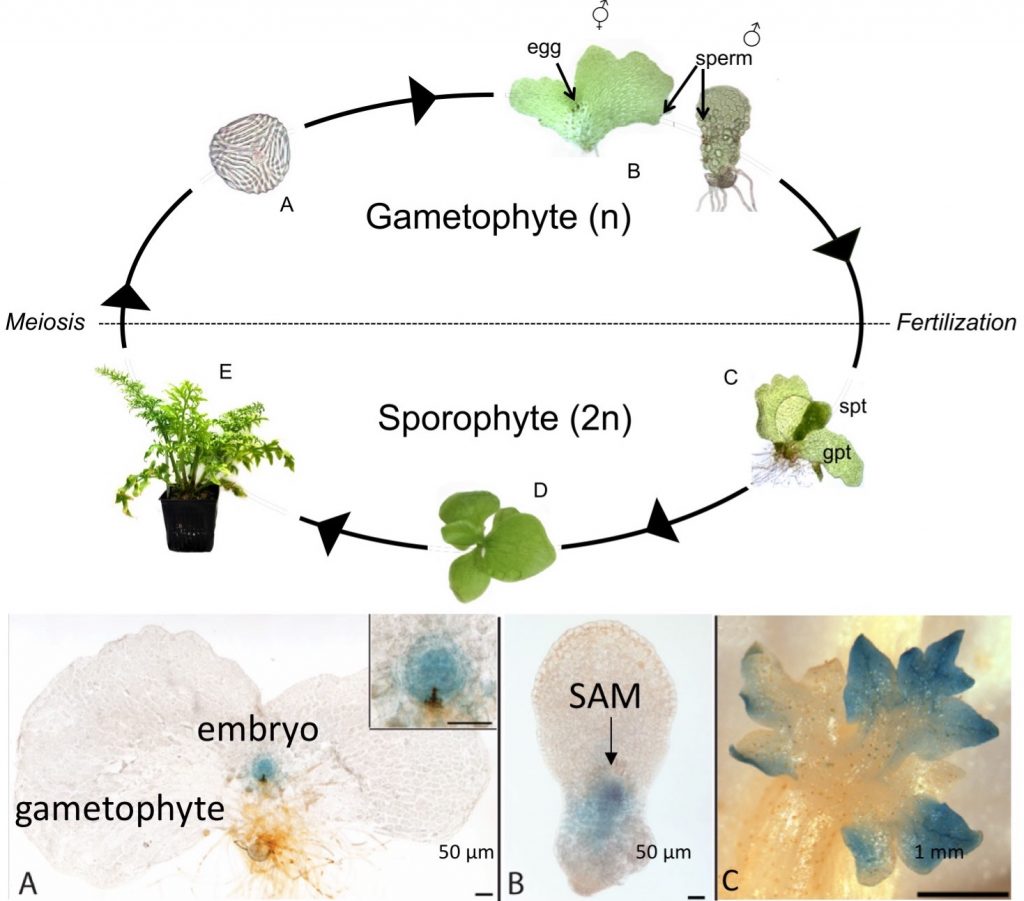
Understanding how duplicate genes and their regulatory networks evolve to promote innovation is a key question in evolution and development. Flowers represent a classic example of evolutionary innovation, one that propelled angiosperms into one of the most notable adaptive radiations. Even though homologs of key floral regulators are present in non-flowering plants, their functions are often unknown. to reconstruct the ancestral function of genes related to flowering, another research thrust in my laboratory is the functional evolution of a master regulator of flowering using the emerging model fern Ceratopteris richardii, a vascular plant without flowers that reproduces via spores.
This is a collaborative project funded by NSF-IOS Evo-Devo (with Dr. Julin Maloof, UC Davis, CA, USA) and in collaboration with Dr. Andrew Plackett (U. of Birmingham, UK).
Convergent evolution of fruit-like structure and function
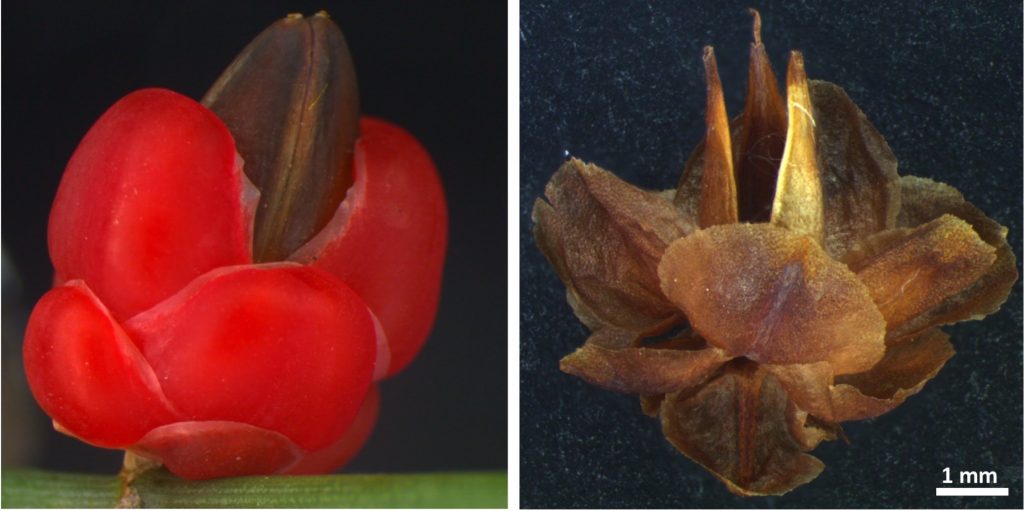
Fruits are an angiosperm key innovation, yet certain gymnosperms have analogous structures that function in seed dispersal, such as the bright-red fleshy bracts of the female cones of certain Ephedra species. Ephedra seeds that disperse by wind, on the other hand, have papery winged bracts. Since the genetic basis of fleshy angiosperm fruits is well characterized, we ask whether they were co-opted from ancestral structures in the seed plant ancestor (before the split of angiosperms and gymnosperms). If so, Ephedra’s fleshy bracts are expected to express genes homologous to those found in angiosperm fleshy fruits. With a long evolutionary history and a well-documented fossil record, this gymnosperm is an ideal model for tackling the evolution of reproductive traits and their effect on species diversification.
This research is funded by a University of Washington Royalty Research Fund to VSD, and via an international collaboration with Argentina (“Raíces” (Roots) program). We are collaborating with Dr. Todd Michael (Salk Inst., CA, USA), transcriptomics and genomics, and Dr. Steffie Ickert-Bond (U. Alaska, Fairbanks), systematics and ecophysiology.