TCSS 422: Operating Systems

TCSS 422: Operating Systems |
|
|
|
|
Grading Policy Weights are assigned to the different elements of the course as listed below. Points are added up at the end of the quarter and weighted accordingly to determine a total percentage score. The percentage score is translated into a final decimal point (4.0 max) grade.
UW Grading Scale 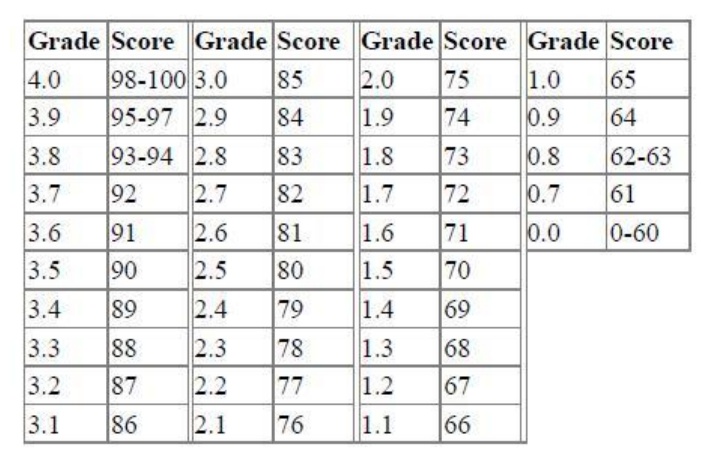
Tutorials / Activities There will be weekly tutorials or activities during the quarter. Some activities will be in class, while others will be online on the Canvas system. These tutorials and activities will help with practicing for quizzes or exams, or help with teaching core programming/OS/Linux skills. The lowest grade in the Tutorials/Activities category will be dropped at the end of the quarter. Quizzes There will be 2 scheduled 1-hour quizzes during the quarter. On days there is a quiz, the class will meet in a larger classroom (Joy 215) . Quizzes will be open note, open book, but no digital devices will be permitted. There will be no make-up quizzes. See exam policy regarding scheduling. Exams There will be two exams during the quarter, the midterm exam, and the final exam. Exams will be held in a larger classroom (Joy 215) . Each exam is comprehensive covering conceptual areas of the course. In Winter 2026, the Final Exam is optional. Students opting out of the Final Exam will receive as a Final Exam grade the average of the two quizzes and midterm exam. Students looking to improve their grade can optionally take the Final Exam. Quiz/Exam Make-Up Policy There will be no make-up exams or quizzes. Vacations, job interviews, work shifts, family visits, etc. must be scheduled around the exams. In the event of a family or medical emergency that prevents taking a quiz, midterm, or final exam, please contact the instructor by providing a written explanation as soon as possible. Given the extreme difficulty to create tests of identical difficulty and challenge, and to ensure fairness to everyone, makeup exams (if offered) will be a similar length and format, but may feature different questions that can be more difficult. Given that make up exams occur after the original exam, students have additional time to prepare for a more rigorous exam. The best plan is to make every effort to take quizzes or exams when originally scheduled. Assignments All assignments are submitted using Canvas and due at 11:59 PM Anywhere On Earth (AOE), which is 4:59 AM Pacific Standard Time unless specified otherwise. Additional time is provided in the event of submission issues (i.e. internet/canvas problem). To ensure the best opportunity for success, it is recommended to start assignments early, and submit in advance no later than midnight local time. There is a 48-hour grace period on all late assignments. Occasionally submitting a few late assignments is ok - submitting EVERY assignment late is a cause of concern. This can be considered for future employer references, letters of recommendation, and end of quarter grade round-ups. Assignments submitted more than 48 hours late will receive a 5% late penalty per day. Late submissions more than 96 hours (4 days) late will not be accepted. Contact the instructor to request to submit late assignments more than 4-days late. This requires an in-person meeting where your progress in TCSS 422 is reviewed and a rigorous success-plan is created. Students adhering to the plan wll have late work accepted at the end of the quarter. When possible, assignments will be posted at least two weeks prior to the due date. All assignments should be submitted online via Canvas. Source code should be submitted as a tar gzip archive file. Included executable files are deleted and programs are then rebuilt from source for grading. DO NOT SEND ASSIGNMENTS, PROGRAMS, OR SOURCE CODE BY EMAIL. THESE WILL NOT BE GRADED. ALL GRADED SUBMISSIONS MUST GO THROUGH CANVAS. Assignments may include programming and/or written components. Programming projects will relate to the lecture and textbook readings throughout the quarter. The projects will use Linux - Ubuntu 24.04 LTS for Winter 2026. Students should create a local Linux Virtual Machine on a laptop or desktop computer (Ubuntu or other Debian Linux) or install Linux as the boot operating system. On request, SET can provide a network-accessible Virtual Machines (VM) with Ubuntu. The assignments will reinforce core OS concepts such as scheduling and memory management. The details of each project will be posted HERE. Generative AI Usage Policy Each assignment will include a "Generative AI Use" policy which describes how generative AI can, or can not be used for each specific assignment. The instructor's philosophy on generative AI is to leverage it where appropriate to increase the size and scope of what deliverables are possible in the academic quarter while still focusing on the core learning outcomes of the course. Since TCSS 422 Operating Systems includes learning about core systems theory and concepts, AI is less applicable than in Software Engineering/Development courses. Please refer to each assignment for the specific policy. Standard AI Usage Policy - when not specified In the event no policy has been specified, the use of AI tools such as ChatGPT, Claude, Github Co-Pilot, or any similar tool to write or "improve" your code or written work is strictly prohibited. This includes the ideation phase of assignments. Assignment solutions generated by Co-Pilot aren't written by you. Turning in code or an essay written by generative AI tools will be treated as turning in work created by someone else, namely as an act of plagiarism and/or cheating. In these scenarios, this will result in a 100% deduction. Reflections on Generative AI for Future Computer Scientsts While Generative AI tools are useful to rapidly solve problems and homework assignments, the core issue is when they are used as a shortcut to avoid learning fundamental computer science concepts. Ultimately, you will get out of your Computer Science study and this course what you put in. Simply copying and pasting code from genereaive AI tools robs you of the chance to learn. Here are four reasons why these generative AI tools undercuts your own education:
To quote the UWT statement of values, "our fundamental purpose is to educate students for life as global citizens." Students are active participants in their education and are expected to uphold high standards of academic conduct. Any action that subverts the educational process - including the inappropriate use of AI, or that misrepresents student knowledge and abilities constitutes academic dishonesty. Links: UW Tacoma Student Conduct Code UW Tacoma - Student Conduct & Academic Integrity In this course some assignments and all exams must be completed individually. When collaboration is permitted for an assignment, this will be noted in the instructions. With respect to student collaboration, these actions are acceptable:
|