| Work in progress
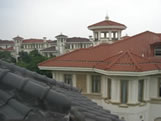
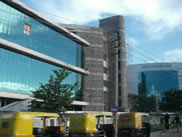
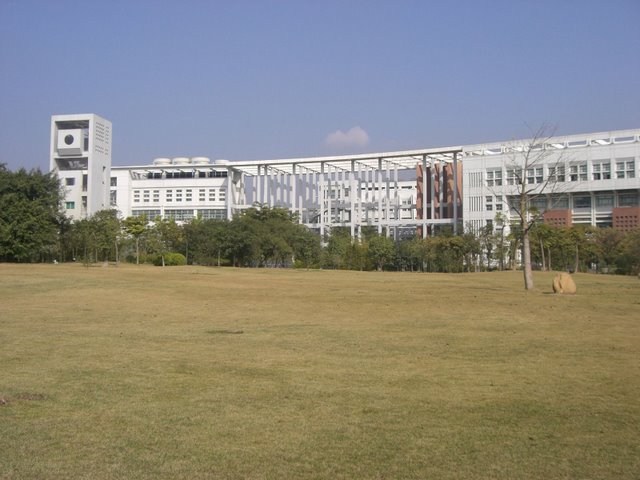
From Bangalore to the Bay Area: Globalization and the Reshaping of Urban Space. Bringing together history, geography, and public policy analysis, this collaborative project investigates how economic globalization is transforming the form and function of cities, changing the ways people live and work, and affecting environmental quality. It makes a comparative study of three major metropolitan areas where globalization and its attendant urban changes have hit home forcefully: the San Francisco Peninsula, home of Silicon Valley; the Pearl River Delta region of southern China; and Bangalore, India. While much has been written in the popular press about the challenge these “new Silicon Valleys” are presenting to the original, little has been done to ground this phenomenon historically and spatially. Drawing upon a range of research tools, from remote sensing and statistical databases to stakeholder interviews and archival source materials, we provide a comprehensive picture of how policy and market action shapes regions over time and across continents.
Building a High-Tech World: A Political History of the Knowledge Economy. This book project examines the role of U.S. institutions in the development of high-tech regions worldwide from 1940 to the present. I am identifying the roots of the "new" economy by investigating the lasting influence of twentieth century public policies around higher education, foreign aid, technology, urban planning, and trade. The topics I consider include the links between Cold War containment strategy and the rise of the knowledge economy, immigration reform and the impact of foreign student populations, technology transfer policy and entrepreneurship, and how and why the American research university became a potent global brand.
|
Scholarly publications
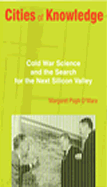
Cities of Knowledge: Cold War Science and the Next Silicon Valley (Princeton University Press, 2005). This book explores how Silicon Valley came to be, why other U.S. regions did not become Silicon Valley, and what Cold War political economy had to do with it. Focusing on the years 1945 to 1970, Cities of Knowledge shows the complex bundle of public and private forces that drove high-tech innovation and determined the very particular geography of high-tech regions. Many places have tried to become "the next Silicon Valley." This book shows how and why this has proved to be so difficult.
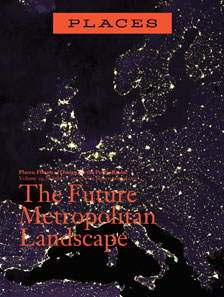
"Landscapes of Knowledge and High Technology," in Places: A Forum of Design for the Public Realm 19.1 (Spring 2007).
“Cold War Politics and Scientific Communities: The Case of Silicon Valley,” Interdisciplinary Science Reviews, May 2006.
"Uncovering the City in the Suburb," in The New Suburban History, ed. Kevin M. Kruse and Thomas J. Sugrue (Chicago, 2006).
“Suburbia Reconsidered: Race, Politics, and Property in the Twentieth-Century Metropolis,” Journal of Social History 39:1 (2005).
“Barriers to Work: the Spatial Divide between Jobs and Welfare Recipients in Metropolitan Areas.” Washington: The Brookings Institution, 1998.
|
| |
| Policy publications |
Cities and Regions in a Global Innovation Economy. 2008 briefing book written for the International Regions Benchmarking Consortium, a collaborative research effort among nine economically dynamic metropolitan regions from Europe, Asia, Australia, and North America.
Meeting the Global Challenge. 2006 report for the University of Washington that outlines the connections between higher education and dynamic communities and regional economies.
“Learning from History: How State and Local Policy Choices Have Shaped Philadelphia’s Growth.” Historical analysis of the tax and land use policies that have reinforced the city-suburb divide in this major metropolitan region. Appeared in the Greater Philadelphia Regional Review, March 2002.
Fight or Flight: Metropolitan Philadelphia and its Future. Pennsylvania Economy League, 2001. This publication received major press coverage in the regional media and spurred new conversations about governmental and civic collaboration. Awarded prizes by the American Society of Landscape Architects and national communications organizations.
Moving Beyond Sprawl: The Challenge for Metropolitan Atlanta. This report, supported by the Turner Foundation and the Brookings Institution, analyzed the roots and consequences of unbalanced growth and economic segregation in the Atlanta region, and presented some prescriptions for change. Published 1998.
Recent commentary
"We Are Not 'The Next Silicon Valley'," Crosscut.com, February 2008
"Seattle's Transportation Malaise is Nothing Special," Crosscut.com, December 2007
"Amazon Joins a Parade of High-Tech to the Urban Core," Crosscut.com, December 2007 |