Arizona

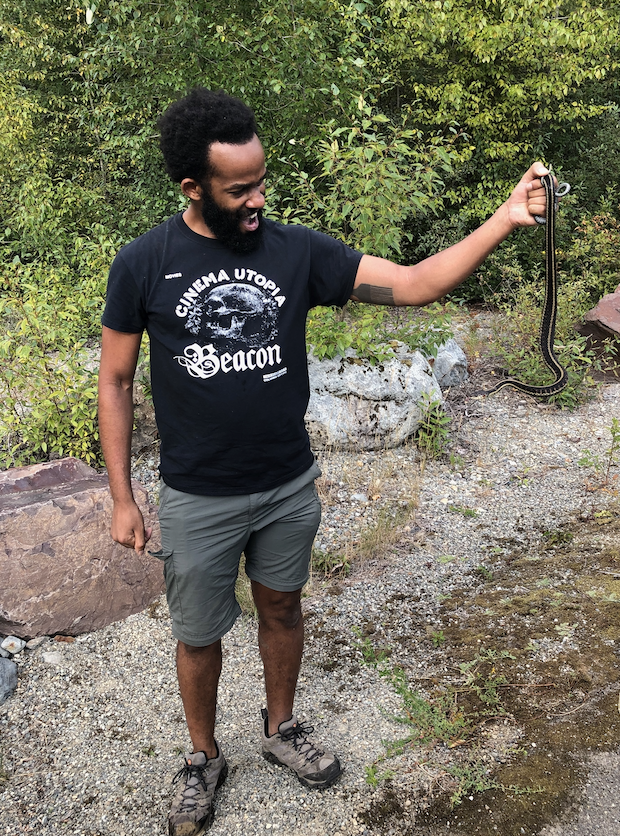
Our collecting trip to Arizona was a huge success! We caught tons of lizards, found some neat snakes, and even turned up some interesting toads.  The photos are all posted on our Flickr site.  Undergraduate researchers Michael, Anna, & Madison are now professional lizard catchers.  Michael had the ultimate honor of being sprayed with blood by a horned lizard.

Sceloporus magister
Photo: Jared Grummer

Lizards:
Sceloporus cowlesi
Sceloporus tristichus
Sceloporus magister
Urosaurus ornatus
Uta stansburiana
Holbrookia maculata
Gambelia wislizenii
Crotaphytus collaris
Crotaphytus bicinctores
Phrynosoma hernandesi
Phrynosoma platyrhinos
Aspidoscelis velox
Aspidoscelis pai 

Snakes:
Pituophis catenifer
Masticophis taeniatus
Crotalus viridis

Not a herp, but still cool.

Frogs:
Bufo woodhousii
Bufo punctatus
Spea multiplicata

All tissue samples were flash frozen in liquid nitrogen.  Contact me if you need some high-quality DNA for your genomics work.

Share
Posted in Burke, Lab | Comments Off

Jared Wins Stoye Award

Congratulations to Jared for winning the prestigious Stoye Award at the World Congress of Herpetology meetings in Vancouver, B.C. for the best student oral presentation in herpetology for his talk, “Species delimitation using Bayes factors applied to the Sceloporus scalaris species group (Squamata: Phrynosomatidae).”

Share
Posted in Burke, Lab | Comments Off

Cloudy with a chance of horned lizards

Many people go to Mexico for a relaxing beach vacation. But Burke scientists spent their recent “summer vacation” searching the desert for signs of the elusive horned lizard… Read more at the Burke Blog:
http://burkemuseum.blogspot.com/2012/08/cloudy-with-chance-of-horned-lizards.html

Phrynosoma taurus

Share
Posted in Burke | Comments Off

Washington collecting permit fail, Arizona win!

For two years, my lab has had a miserable time trying to get scientific collecting permits from the Washington Department of Fish and Wildlife (WDFW) to conduct scientific research in Washington.  For example, the WDFW prohibits us from collecting a single amphibian from the Olympic or Cascade Mountains. Apparently, our research and collection activities at the Burke are not in sync with the protection mandates of the WDFW – but this only applies to amphibians and reptiles (birds and mammals are still okay to study.)  This is a strange state of affairs, and the situation makes no sense whatsoever.  The lack of WDFW support is a big disappointment to everyone in my lab, because we all have aspirations to conduct exciting research projects in Washington.

What are we supposed to do with all our free time now that we can’t do research in Washington?  How about research in Arizona!

There are tons of interesting research questions to pursue in Arizona (as there are in Washington), and I have fond memories of research trips to Arizona with people like Tod Reeder, Jay Cole, Lars Bell, Jon Richmond, Manna Warburton, & Tom Devitt.  But, would the Arizona Game and Fish Department grant permission to my lab to conduct scientific research, or has the mood shift that has hit Washington made it all the way to Arizona as well?

The verdict:  I was able to obtain a Scientific Collecting Permit for Arizona in four working days, and the permit was free!  Compare that to Washington – the permit cost $117 and it took over 2 months for a permit that specifically denies our research activities.

It’s official, our lab is taking a summer road trip to Arizona! Our goal is to study a lizard hybrid zone, which requires us to catch about 160 lizards. Trying to accomplish a study of similar scope in Washington, under the current WDFW restrictions, would take approximately 32 years.  Thanks anyways, but I think that we’d rather go to Arizona.

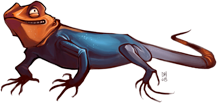
What Matt McElroy might look like when he's road cruising for lizards in Arizona this summer.

Share
Posted in Burke, Lab | Comments Off

Postdoctoral position available

A postdoctoral researcher position is available! The position is part of a systematics project funded by the National Science Foundation. The duration of the postdoctoral position is three years. The project goal is to apply new DNA sequencing technologies to resolve rapid radiations and recent speciation events in the tree of life. The research project is focused on a diverse group of lizards (genus Sceloporus), although candidates with interests in any taxonomic group are encouraged to apply – no previous research experience with reptiles is required. Training and research activities cross multiple disciplines, including phylogenetics, bioinformatics, comparative genomics, and systematics. Please send me an email if you are interested.

Details: The ideal candidate will have a strong background in phylogenetics, and experience working with next-generation sequence data. Responsibilities include collecting next-generation sequence data, developing and running bioinformatics pipelines to clean, assemble, and align the data, and conducting phylogenetic analyses using high-performance computing resources. Preferably, the candidate will have experience scripting in either Perl or Python, and be familiar with MySQL. Candidates will be expected to have completed a PhD in Biology or a related field. Review of applications will begin immediately and continue until the position is filled.

Share
Posted in Lab | Comments Off