Degree: Master's, Developmental Neuroscience
Graduate School: University of California, San Francisco (UCSF)
Undergraduate School: Univ. of Kansas
Current Position: Staff Writer, Neuroscience for Kids web site, University of Washington
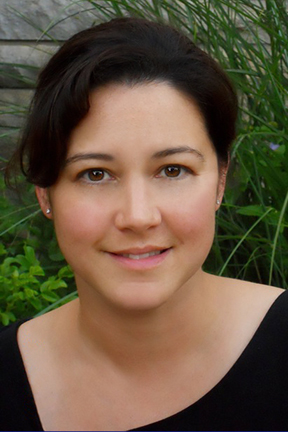
Ellen Kuwana
Next, I got a job as Assistant Managing Editor at the UCSF newspaper, The Synapse. There I could write and edit to my heart's content, but I missed being up-to-date on what was happening in science research. Now I have the perfect job-one that combines science (which I think is important) with writing (which I think I'm good at)-here at Neuroscience for Kids. This job allows me to be creative and to use my science knowledge to educate others. The main challenge is "translating" articles written by scientists into articles that non-scientists can understand.
I never found my science classes easy, but that was one reason I kept with it; I like challenges. Without encouragement from the aforementioned mentors and other people at UCSF, including Lori Sussel, I never would have stuck with science for as long as I did. I'm glad that I obtained my Master's degree, as my experiences at UCSF enrich my science writing.
I think that anyone who is reasonably smart can be a scientist. You just have to be willing to work hard. I think scientists need to have a passion for their work, patience for lab work that can be tedious and slow at times, and perseverance to keep going when things go wrong. Science is as much about failure as it is about success. Not all your experiments work, but you learn from them and go on. The up side is that science allows you to be creative, to be a free thinker, and to set your own schedule to a certain extent. You never know where your research will take you. Science is unpredictable. It's different each and every day, and that was what I enjoyed most--that, and the wonderful people I worked with at UCSF.
Since leaving Neuroscience for Kids in 2005, I've held several interesting jobs at the University of Washington (UW). I helped revise content for a continuing medical education (CME) resource about lung function testing (for asthma mostly) called "Spirometry Fundamentals" which involved overseeing video shoots. I now am Content Director for another CME offering about safely sedating children for emergency room procedures called "Pediatric Procedural Sedation & Analgesia." Both of these resources were developed in the UW Department of Pediatrics.
I then worked for the UW Department of Psychiatry, and oversaw content development (again, supervising video shoots, editing content, deciding on how to present that information online and what graphics would support the content) on continuing education resources for chronic opioid therapy for non-cancer pain. These are resources to train healthcare professionals how to safely manage patients on prescription painkillers. Then I worked for half a year coordinating patient care for the UW Department of Neuro-oncology, assisting with clinical trials at the Seattle Cancer Care Alliance. This work was challenging and sobering. Now I work with a research group in Psychiatry that has the largest depression care management model in the United States. I am responsible for all of their online educational resources, and am creating the curriculum for a certification course in Integrated Mental Health Care.
As you can tell, a science background can take you in all sorts of directions. I've been lucky to find my niche in online medical training resources, which involve lots of writing and editing. My jobs have been interesting and challenging, and I get to work with smart people who are motivated to help others.
![[email]](./gif/menue.gif)