Examples From:
|
|||||||||||||||||||||||||||||||||||||||||||||||||||||||||||||||||||||||||||||||||||||||||||||||||||||||||||||||||||||||||||||||||||||||||||||||||||||
PsychologyHowell (1995) presents an example based on the research of Wegner, Compas, and Howell (1988) about the relationship between stress and mental health in first-year college students. Students completed a questionnaire about life events stress they had experienced and they also completed the Hopkins Symptom Checklist. High scores on Stress and Symptoms indicate high levels of life events stress and psychological problems, respectively. Below are the data for ten students selected from the larger study.
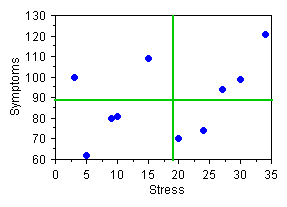 four sections by the means. Are there more students in the positive diagonal
corners (upper-right and lower-left) or in the negative diagonal corners
(upper-left and lower-right)? If there are more on the positive diagonal,
this suggests there is a positive
relationship between psychological stress and mental health symptoms.
four sections by the means. Are there more students in the positive diagonal
corners (upper-right and lower-left) or in the negative diagonal corners
(upper-left and lower-right)? If there are more on the positive diagonal,
this suggests there is a positive
relationship between psychological stress and mental health symptoms.
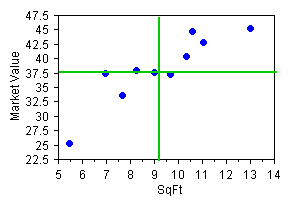 four sections by the means. Are there more parcels in the positive diagonal
corners (upper-right and lower-left) or in the negative diagonal corners
(upper-left and lower-right)? If there are more on the positive diagonal,
this suggests there is a positive
relationship between a parcel's size and its market value.
four sections by the means. Are there more parcels in the positive diagonal
corners (upper-right and lower-left) or in the negative diagonal corners
(upper-left and lower-right)? If there are more on the positive diagonal,
this suggests there is a positive
relationship between a parcel's size and its market value.
The paper "A Study of Stainless Steel Stress-Corrosion Cracking by Potential Measurements" (Corrosion, 1962, pp. 425-432) reports on the relationship between applied stress (in kg/sq mm) and time to fracture (in hours) for 18-8 stainless steel under uni-axial tensile stress in a 40% CaCl2 solution at 100C. Ten different settings of applied stress were used, and the resulting data values (as read from a graph which appeared in the paper) were:
Does it appear that the time for the steel to fail is related to the amount of stress applied?
The graph to the right shows the points for each test divided into
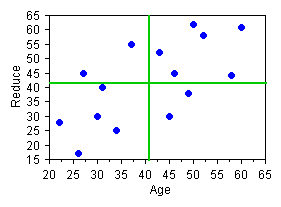 four sections by the means. Are there more dieters in the positive diagonal
corners (upper-right and lower-left) or in the negative diagonal corners
(upper-left and lower-right)? If there are more on the positive diagonal,
this suggests there is a positive
relationship between age and the amount of cholesterol reduced.
four sections by the means. Are there more dieters in the positive diagonal
corners (upper-right and lower-left) or in the negative diagonal corners
(upper-left and lower-right)? If there are more on the positive diagonal,
this suggests there is a positive
relationship between age and the amount of cholesterol reduced.
|
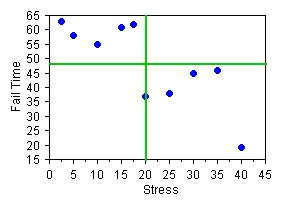 four sections by the means. Are there more tests in the positive diagonal
corners (upper-right and lower-left) or in the negative diagonal corners
(upper-left and lower-right)? If there are more on the negative diagonal,
this suggests there is a negative
relationship between stress and the time until failure.
four sections by the means. Are there more tests in the positive diagonal
corners (upper-right and lower-left) or in the negative diagonal corners
(upper-left and lower-right)? If there are more on the negative diagonal,
this suggests there is a negative
relationship between stress and the time until failure.