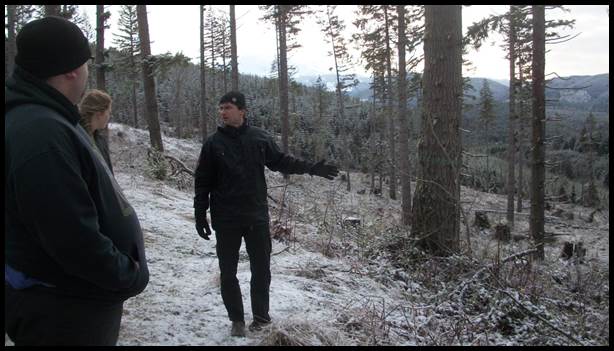
GREGORY J.
ETTL
Associate
Professor
Associate
Director, School of Environmental and Forest Sciences
Corkery
Family Chair
Director:
Center for Sustainable Forestry at Pack Forest
University
of Washington, School of Environmental and Forest Sciences
Box
352100, Seattle, WA 98195-2100
Phone: 206 616-4120
E-mail: ettl@u.washington.edu
Professional Preparation
University of Wisconsin Double
Major Zoology/Secondary Education B.S. 1987
University of Washington Biology
Teaching
M.A.T. 1989
University of Washington Ecosystem
Analysis
Ph.D. 1995
Academic
Appointments
· Associate Director, 2013-2015, School of Environmental and Forest
Sciences
· Director, Stand Management Cooperative, 2012-2015
· Associate Professor, 2012-present, University of Washington,
Seattle, WA
· Associate Professor, WOT 2006-2012, University of Washington,
Seattle, WA
· Professor, 2003-2006, Warren Wilson College,
Asheville, NC
· Assistant/Associate Professor, 1995-2003, St. Joseph’s
University, Philadelphia, PA
RESEARCH INTERESTS
My research interests are broad and
interdisciplinary, reflecting my academic interests and administrative duties
as Director of three research centers.
Many of my students work on projects that draw from multiple disciplines
but in general fit within two categories:
1.
Forest Ecology. The largest emphasis of my
previous research has been related to forest responses to either the physical
environment or disturbance. My current
research in this area uses several approaches to study forest responses to
environmental stress including: dendrochronology, population modeling, and
ecophysiology. All of this work starts
with field-based observations and data collection.
2.
Forest Management and Silviculture. I manage
the UW’s 4300 acre experimental forest (www.packforest.org), with active projects examining seedling growth and mortality,
wildlife habitat and carbon sequestration associated with varying management
practices. I am interested in
sustainable forest management at multiple levels and through my students my
efforts in this area have expanded to forest management in the coastal rainforest
of south-central Chile and community-managed firewood harvest in the pine-oak
forests of Chiapas, Mexico.
SELECTED PUBLICATIONS
·
Schroder, S.A.K., Tóth, S.F., Deal, R.L. and Ettl,
G.J., 2016. Multi-objective optimization to evaluate tradeoffs among forest
ecosystem services following fire hazard reduction in the Deschutes National
Forest, USA. Ecosystem
Services 22: 328–347.
·
Fischer, P.W., Cullen, A.C. and Ettl, G.J., 2016. The Effect of Forest Management Strategy
on Carbon Storage and Revenue in Western Washington: A Probabilistic Simulation
of Tradeoffs. Risk Analysis.
·
Roesch-McNally,
G.E., Rabotyagov, S., Tyndall, J.C., Ettl, G. and Tóth, S.F. 2016.
Auctioning the Forest: A Qualitative Approach to Exploring Stakeholder
Responses to Bidding on Forest Ecosystem Services. Small-scale Forestry, 15:321-333. DOI 10.1007/s11842-016-9327-0
·
Khan, Z., Kandel,
S. L., Ramos, D. N., Ettl, G. J., Kim, S. H., &
Doty, S. L. 2015. Increased Biomass of
Nursery-Grown Douglas-Fir Seedlings upon Inoculation with Diazotrophic
Endophytic Consortia. Forests, 6(10), 3582-3593.
·
Marcinkowski,
Kailey, David L. Peterson, and Gregory J. Ettl.
2015. "Nonstationary temporal
response of mountain hemlock growth to climatic variability in the North
Cascade Range, Washington, USA." Canadian
Journal of Forest Research 45:
676-688.
· Knoth, J. L., S.-H.
Kim, G.J. Ettl and S.L. Doty. 2014. "Biological nitrogen fixation and
biomass accumulation within poplar clones as a result of inoculations with diazotrophic endophyte consortia." New Phytologist
201(2): 599-609.
· Tóth, S. F., G. J. Ettl, N. Könnyű, S. S. Rabotyagov,
L. W. Rogers, J. M. Comnick. 2013.
"ECOSEL: Multi-objective optimization to sell forest ecosystem
services." Forest Policy and Economics 35:73-82. (http://dx.doi.org/10.1016/j.forpol.2013.06.011)
· Knoth, J.
L. Kim, S-H. Ettl, G.J., and Doty S.
L. 2013. Effects of Cross Host Species
Inoculation of Nitrogen Fixing Endophytes on Growth and Leaf Physiology of
Maize. GCB Bioenergy 5:408-416.
· Rabotyagov, S. S., S. Toth, F., G.J. Ettl. 2013. "Testing
the Design Variables of ECOSEL: A Market Mechanism for Forest Ecosystem
Services." Forest Science 59(3):
303-321.
·
Cross, Jason C., Eric C. Turnblom, and
Gregory J. Ettl. 2013 "Biomass production on the Olympic and Kitsap
Peninsulas, Washington: updated logging residue ratios, slash pile
volume-to-weight ratios, and supply curves for selected locations." General Technical Report-Pacific Northwest
Research Station, USDA Forest Service PNW-GTR-872.
·
Gou, X., F. Zhang, Y. Deng, G.J. Ettl, M. Yang, L.
Gao, and K. Fang.
2012. Patterns and dynamics of
tree-line response to climate change in the eastern Qilian Mountains,
northwestern China. Dendrochronologia
30:121-126.
·
Tóth, S.F.,
G.J. Ettl, and S.S. Rabotyagov. 2010. ECOSEL: An Auction Mechanism for Forest
Ecosystem Services. Mathematical and
Computational Forestry & Natural-Resource Sciences. 2:99-116.
·
Ettl, G.J. 2010. The Deniable Truth of Sustainable Forestry. Northwest Science 84:307-309.
·
Ettl, G.J.,
and N. Cottone. 2004. Whitebark pine Pinus albicaulis in Mt.
Rainier National Park, USA: Response to blister rust infection. In H. R. Akçakaya, M. A. Burgman, O.Kindvall,
C. C. Wood. P. Sjögren-Gulve, J. S. Hatfield, and M. A. McCarthy (editors),
Species Conservation and Management: Case Studies, Pp. 36-47. Oxford University Press, New York, N.Y.
· Kusnierczyk, E. and G.J. Ettl. 2002. Dendroecology of
Ponderosa pine (Pinus ponderosa) in the Okanogan National Forest, WA. Ecoscience
9:545-552.
· Ettl, G.J., and D.L. Peterson.
2001. Genetic variation of
subalpine fir (Abies lasiocarpa) in Olympic National Park, WA, USA:
Differentiation in response to an elevation gradient. Silvae Genetica 50:145-153.
· Ettl, G.J., and D.L. Peterson 1995. Growth response of subalpine fir (Abies
lasiocarpa) to climate in the Olympic Mountains, Washington, USA. Global Change Biology 1:213-230.
Current
Graduate Students
MATTHEW AGHAI
My
B.Sc. was earned at Purdue University where I focused on wildlife ecology and
forest management. Later I earned a M.Sc. in Forest Resources at the University
of Idaho, where I worked with propagation and habitat restoration techniques
for native timber and rangeland species in the intermountain region.
Post-graduation I was employed as a research scientist at the Center for Forest
Nursery and Seedling Research and conducted research and technical outreach in
the Great Basin, the Rocky Mountains, the Pacific Northwest, and assisted the
Lebanon Reforestation Initiative. Much of the work included in situ remote
outreach seeking to optimize propagation techniques and cultural practices in
establishing native plant communities.
My interests in natural resource management are broad, however, my dissertation work will focus on tree regeneration dynamics in relation to silvicultural practices and shifting environmental parameters in the Pacific Northwest. I am particularly interested in evaluating establishment potential of various tree species using instrumentation and analysis techniques that provide insight into ecophysiological relationships.
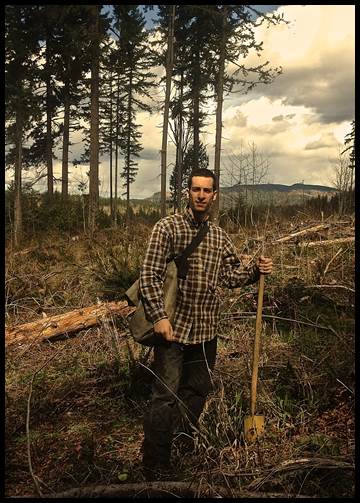
LORD AMEYAW
I
graduated in 2007 from the University for Development Studies (in Ghana, West
Africa) with a B.S. in Agricultural Technology (Renewable Natural Resources
option). Afterwards, I worked with the Forestry Research Institute and Forestry
Commission of Ghana till summer 2011 when I was admitted to Auburn University
in Alabama. In summer 2013, I graduated from Auburn University with a M.S. in
Rural Sociology. I worked on the impacts of forestland ownership changes on
rural forest dependent communities in Alabama for my thesis.
For
my dissertation, I will focus on determining the socio-economic and
environmental implications of cocoa farming on selected forest reserves in the
Western Region of Ghana. I will investigate forest regeneration strategies that
are socially and environmentally acceptable in an area where socio-economic
needs have historically clashed with environmental/forest conservation and
protection.
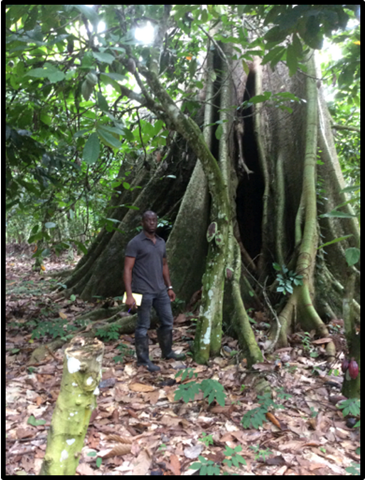
David
Diaz
Leaving home
in San Antonio, Texas, I attended Harvard College ('06), where I applied stable
isotope ecology to investigate historical land-use legacies and nutrient
cycling in soils and plants at Harvard Forest. I then moved to Oregon State
University (Soil Science MS, '08) to explore the movement of
isotopically-labeled glucose through the soil microbiome and the potential for
"priming" or positive-feedbacks in soil organic matter decomposition
related to climate change.
Among other
positions since leaving OSU, I've worked as a reporter and analyst of
global forest carbon policy and markets at Forest Trends’ Ecosystem Marketplace
(Washington, DC) and on carbon credit protocol
development, carbon project assessment, and contract origination
at The Climate Trust (Portland, OR). In 2013, I returned to Ecotrust (Portland, OR) where I now lead forest ecosystem
modeling and data science as well as the development and application of
decision support services with smaller forest owners, including an open
source web application called Forest Planner (or see a short demo video here).
I began my
PhD studies at UW in 2016, where I am grateful to have been honored
by the: USGS Northwest Climate Science Center Graduate Fellowship, James and Marinelle Bethel Endowed Fellowship, J. H. Bloedel Forestry Research Scholarship, William G. Reed
Endowed Fellowship in Sustainable Resource Sciences, and Achievement Rewards
for College Scientists (ARCS) Scholarship.
My
PhD research interests involve integrating climate change effects, big
data, and machine learning elements into forest modeling and analytics. More
generally, I see my work as more fundamentally about adapting
and transferring of modern tools and technologies to make ecological
forest stewardship more accessible to non-industrial forest owners.You
can follow me on Research Gate, Twitter (@daviddiaz), and GitHub (@d-diaz).
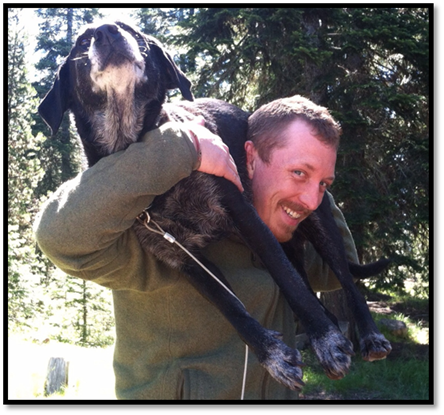
KI-WOONG LEE
I am
a graduate of KonKuk University (BS) and Seoul
National University (MS) in South Korea. During my master’s
program, I was involved in AKECOP (ASEAN-Korea Environmental Cooperation
Project), and focused on biomass and carbon storage in
vegetation and soil of two Acacia plantations (A. mangium and
A. auriculiformis)
in the Philippines for
my MS degree. I have also conducted research on heart-rot, and natural regeneration in South
Korea and eco-physiology in the Philippines. I am
broadly interested in Forest
decline, carbon sequestration, and plant stress physiology.
My
PhD dissertation work is examining: 1) the effects
of climate on the stress physiology of Douglas-fir (Pseudotsuga menziesii) across
three developments phases (seedlings, saplings, and canopy closure) under artificially induced-drought treatments, and 2) the effects
of various silvicultural treatments on water use efficiency using carbon and
oxygen isotope analysis. For physiological research, a multi-year dataset of sapflow, dendrometer, photosynthesis, water potential and environmental data will
be collected in order to determine a potential physiological mechanism for
changes related to drought stress.
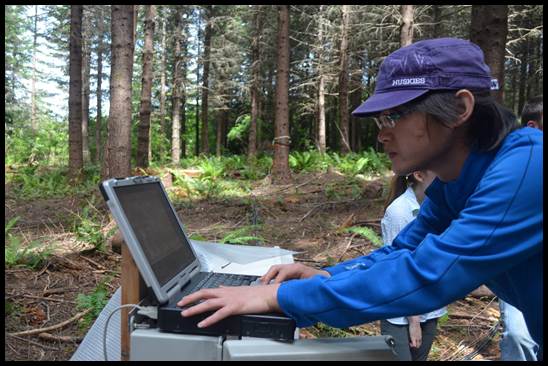
EMILIO VILANOVA
I received my first degree as a Forestry
Engineer in 2003 at the Universidad de Los Andes (ULA), Mérida, Venezuela. From
2004 to 2007, I was part of the Master’s Program on Tropical Forest Management
at ULA where I focused my work on the impact of selective logging on the
dynamics of aboveground biomass and carbon in a tropical managed area of the Guayana region. Since 2008, I have been working as member
of the Institute of Forest Research and Development (INDEFOR) at ULA where I
teach and conduct research in the topics of tropical forest dynamics and
options for sustainable forest management.
As a PhD student at the University of
Washington (UW) I intend to focus my research on the long-term dynamics of
several types of Venezuelan forests that have been monitored for periods from
20 to 40 years. This data is part of several international efforts such as the
Amazon Forest Inventory Network (RAINFOR - http://www.rainfor.org/) or
the Amazon Tree Diversity Network (ATDN - http://web.science.uu.nl/Amazon/atdn/).
Specifically, I am interested in studying how forests located in contrasting
climate conditions respond to the type, frequency, scale and intensity of
disturbances focusing on long-term tree dynamics (growth, mortality, and
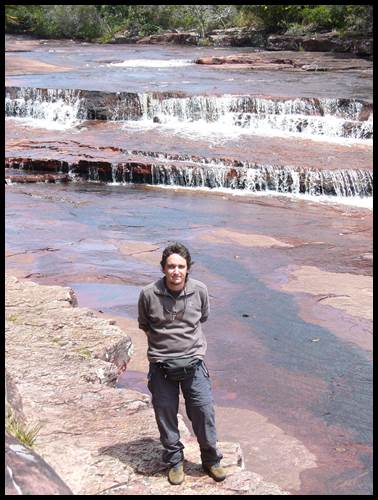
recruitment), carbon cycle and species diversity. More info: https://www.researchgate.net/profile/Emilio_Vilanova
Former
GRADUATE Students
ANDY COCKLE (2015)
My
research involved measuring growth and mortality among Douglas-fir and western redcedar seedlings planted into a variable-retention
harvest unit at Pack Forest. My
interests are equally in the worlds of forest ecology and silviculture. I hope to inform silvicultural
managers in regards to pattern and amount of retention to promote establishment
of a mixed-species seedling cohort, as well as the efficacy of understory
vegetation management and protection from ungulate herbivory. I am a full-time father, living in
Bellingham with my wife Ronda.
RHIANNON
FOX (Graduated Summer 2014)
I graduated from the University of Idaho
with a B.S. in Ecology and Conservation Biology and came to UW from a career in
environmental consulting. I am broadly interested in the ecological
implications of plant physiological responses to climate. My research centered
around a multi-year dataset of sap flow, dendrometer,
and local climate measurements in order to gain insight into some of the
physiological and ecological differences between three Pacific Northwest
dominant tree species, western Red-cedar (Thuja
plicata), western hemlock (Tsuga heterophylla) and Douglas-fir (Pseudotsuga menziesii).
I am examined patterns of tree hydraulics over short and long time periods, teasing
out the interactions between species and tree canopy position. My research was
conducted in a mature conifer stand at the University of Washington's Pack
Forest. (www.sefs.washington.edu/academicPrograms/Graduation2014.pdf)
JULIE
BAROODY (Graduated
Summer 2013)
My studies focused on
the integration of science and people in the community-managed forest of Lázaro Cárdenas, in the highlands of Chiapas, Mexico. I proposed a silvicultural
plan for stopping firewood extraction-driven degradation of the pine-oak forest
while concurrently enhancing forest health. My work was conducted with the
support of conservation organization ProNatura Sur, a
member of the Alianza Para la Conservación
de los Bosques de Pino-Encino de Mesoamérica,
and the Ridgeway family. My background includes grounding in social science
(Middlebury College, BA, 2004) and six years of experience in international
forest conservation with the Rainforest Alliance. At that organization,
my work largely focused on the conservation of tropical forest carbon stocks
through sustainable agroforestry and forest management and on furthering the
development of schemes for reducing emissions from deforestation and forest
degradation (REDD+). I am currently
working as a consultant on conservation projects in developing countries. (https://digital.lib.washington.edu/researchworks/bitstream/handle/1773/24118/Baroody_washington_0250O_12357.pdf?sequence=1)
PAUL
FISCHER (Graduated Winter 2013)
I have a BS from the University of
Minnesota, and I earned a MS in Sustainable Forestry and a MPA in Environmental
Policy at the University of Washington in 2013. My thesis investigated how
different management practices affect forest carbon sequestration and the
potential for forest carbon offsets using more than 10 years of inventory data
from UW’s 4,200-acre Pack Forest. To make this information useable to forest
owners, I provided a financial analysis that explores importance of uncertainty
and risk on decision making and implementation of forest C projects. The
results from this experiment inform forest management decisions in the western
Cascades. I currently work as a
consultant on forest carbon projects in the Pacific Northwest.
(https://digital.lib.washington.edu/researchworks/bitstream/handle/1773/22918/Fischer_washington_0250O_11152.pdf?sequence=1&isAllowed=y)
HYUNJU LEE
I have a BS and a MS in forest resources
from Korea University. I researched on the effects of forest fires during my
BS, and studied the effects of pretreatments on seed germination of Abies koreana for
my MS. I worked for the Korean Forest
Service for 5 years, in the civil service consultation and international
cooperation divisions, before beginning my studies at the UW.
KATE
MCBURNEY (Graduated Fall 2012)
I received my BA at Earlham College (’06) and a MS from the
University of Washington in 2012. My MS research described ectomycorrhizal
fungal (EMF) communities that associate with a mature Alnus rubra stand at Pack Forest in western Washington. My research
sampled fungal distributions over the course of 5 months (May – Sept) during
the 2011 growing season. I identified 22
fungal associates, including 14 species new to Alnus rubra, using molecular techniques and comparing DNA sequences
to physical descriptions (morphotyping) to verify fungal type. Comparison of
fungal communities to soil variables and Frankia
bacteria nodule presence was quantified.
Multivariate analyses of fungal community composition described
community changes over short distances; EMF communities varied with soil
chemistry, and Frankia presence. Some EMF species showed little overlap in
distribution suggesting niche partitioning or competitive exclusion. I currently work as research scientist in the
Center for Forest Nursery and Seedling Research in Moscow, ID.
(https://digital.lib.washington.edu/researchworks/bitstream/handle/1773/22657/McBurney_washington_0250O_11317.pdf?sequence=1)
TREVOR WALTER (Graduated
Fall 2011)
I
have a BS from Oberlin College and an interest in sustainable forestry,
particularly in the temperate Chilean rainforests. Plantation forestry in Chile has led to
widespread degradation of native forests.
However, more recently two factors have brought this status quo into
question. My Master’s thesis examined
the relationship of these two elements with respect to the cost of
management. Using spatially explicit
data on exotic Eucalyptus globulus plantations from the Reserva Costera
Valdiviana (40°S, 73.65°W), I wrote a mixed-integer program, based on the work
of Professor Sándor Tóth, to temporally optimize harvest and restoration. Cost and revenue provided constraints, but
protection of biodiversity, stream flow and community participation also modify
the solutions produced. The result is a
decision-support tool for identifying operational characteristics and
trade-offs of a long-term restoration plan.
A multitude of solutions were produced and can be compared in terms of
their contribution to ecosystem services, community participation and revenue
objectives. I am currently a
Community-based Resource Management Technical Officer for the Worldwide Fund
for Nature in Valdivia, Chile.