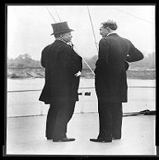
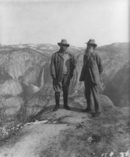
Roosevelt and
Pinchot
Roosevelt's
conservationist leanings also impelled him to preserve national sites of scientific, particularly archaeological, interest. The 1906 passage of the Antiquities Act gave him a tool for creating national monuments by presidential proclamation, without requiring Congressional approval for each monument on an
item-by-item basis. The language of the Antiquities Act
specifically called for the preservation of "historic landmarks, historic and prehistoric structures, and other objects
of historic or scientific interest," and was primarily
construed by its creator, Congressman James F. Lacey (assisted by the prominent archaeologist Edgar Lee Hewett), as targeting the prehistoric ruins of the American Southwest. Roosevelt, however, applied a
typically broad interpretation to the Act, and the first national
monument he proclaimed, Devils Tower National Monument in Wyoming, was preserved for reasons tied more to geology than archaeology. Roosevelt's conservationism caused
him to forbid having a Christmas tree in the White House. He was reportedly upset when he found a small tree his son had been hiding. After learning about the commercial farming of
Christmas trees, where no virgin forests were cut down to supply the demand during the Christmas holiday,
he relented and allowed his family to
have
a tree each season.